2026 Top Steel Carbon Plate Options for Your Industrial Needs?
When considering industrial applications, the choice of Steel Carbon Plate is critical. This material offers versatility and strength for various uses. Industries rely on it for construction, manufacturing, and energy sectors.
In 2026, there are diverse options available in Steel Carbon Plate. Each option varies in thickness, dimensions, and properties. Choosing the right plate can be challenging. It's crucial to evaluate your specific needs and requirements.
Some plates may not meet strict industry standards. This could lead to unexpected failures during use. Reflecting on quality is essential when making a choice. With careful consideration, optimal performance can be achieved in your projects.
Understanding the Importance of Carbon Steel Plates in Industry
Carbon steel plates play a crucial role in various industrial applications. These plates are known for their strength and durability, making them ideal for construction and manufacturing. The versatility of carbon steel allows it to adapt to different environments. Its ability to withstand heavy loads makes it a preferred choice for structural elements in buildings and machinery components.
Moreover, the importance of carbon steel plates cannot be overstated. They are used in creating pipelines, automotive parts, and heavy equipment. Despite their advantages, they can be prone to rust and corrosion if not treated properly. Industries must regularly assess their steel plates for wear and tear. This constant attention ensures safety and efficiency in operations.
Environmental factors also influence the effectiveness of carbon steel. Humidity and temperature can affect their lifespan. It’s essential to consider these conditions when choosing materials. The focus should always be on balancing quality and cost. Industrial players must reflect on their choices, ensuring they invest in the right options for longevity and strength.
2026 Top Steel Carbon Plate Options for Your Industrial Needs
Understanding the importance of carbon steel plates is crucial for various industrial applications. This chart illustrates key characteristics such as thickness, weight, cost, and yield strength of typical carbon steel plates used in manufacturing.
Key Properties of Carbon Steel Plates for Industrial Applications
When selecting carbon steel plates for industrial applications, consider their key properties. Carbon steel plates boast excellent tensile strength. They can withstand significant loads and provide durability in rugged environments. Their hardness varies, depending on carbon content, which affects how they perform under stress.
Weldability is another critical aspect. For many applications, the ability to weld carbon steel plates is essential. However, higher carbon content can complicate this process. Proper care is needed during welding to avoid cracking. This reflects the need for detailed planning and awareness of potential challenges.
Finally, consider corrosion resistance. Most carbon steel plates require protective coatings. Without these, they may deteriorate quickly in humid or corrosive environments. This highlights the importance of environment-specific decisions. Each selection requires thoughtful evaluation to ensure optimal performance in your industrial settings.
Top Manufacturers of Carbon Steel Plates in 2026
The demand for carbon steel plates is expected to rise significantly by 2026. Industry reports indicate that the global carbon steel plate market will reach approximately $150 billion. This increase is driven by growing construction and manufacturing sectors worldwide. Analysts anticipate a compound annual growth rate (CAGR) of around 5% during this period.
Top manufacturers are emphasizing innovation. Some are enhancing production methods to improve plate strength. However, quality inconsistency remains an area of concern. Reports suggest that about 20% of producers struggle with maintaining uniform thickness and tensile properties. This inconsistency can impact end-user applications, potentially leading to failures in critical infrastructure.
Moreover, sustainability is becoming vital. Many manufacturers are exploring ways to reduce carbon footprints. Yet, industry experts warn that this transition may slow progress for smaller companies. Larger producers are more likely to invest in green technologies. As a result, smaller players may need to rethink their strategies to stay competitive in this evolving landscape.
Comparative Analysis of Different Carbon Steel Grades
When it comes to carbon steel grades, understanding their differences is crucial for industrial applications. Carbon steel comes in several grades, each with unique properties. For instance, mild steel, with low carbon content, is easy to weld and form. It is ideal for structural components, but it may lack strength in some heavy-duty applications.
On the other hand, medium carbon steel offers a balance between strength and ductility. This grade is suitable for automotive parts or machinery components. However, it may require heat treatment to enhance its hardness. High carbon steel contains more carbon, which leads to enhanced wear resistance. But, it can be brittle, making it less suitable in situations requiring impact resistance.
When evaluating these options, consider your specific needs. Heavy-duty applications may demand higher grades for durability. Yet, using high-grade materials in less demanding contexts might result in unnecessary costs. A thoughtful approach can save both time and resources while ensuring the right material is selected. Each grade has its place, but the perfect choice isn’t always clear-cut.
Best Practices for Sourcing and Using Carbon Steel Plates
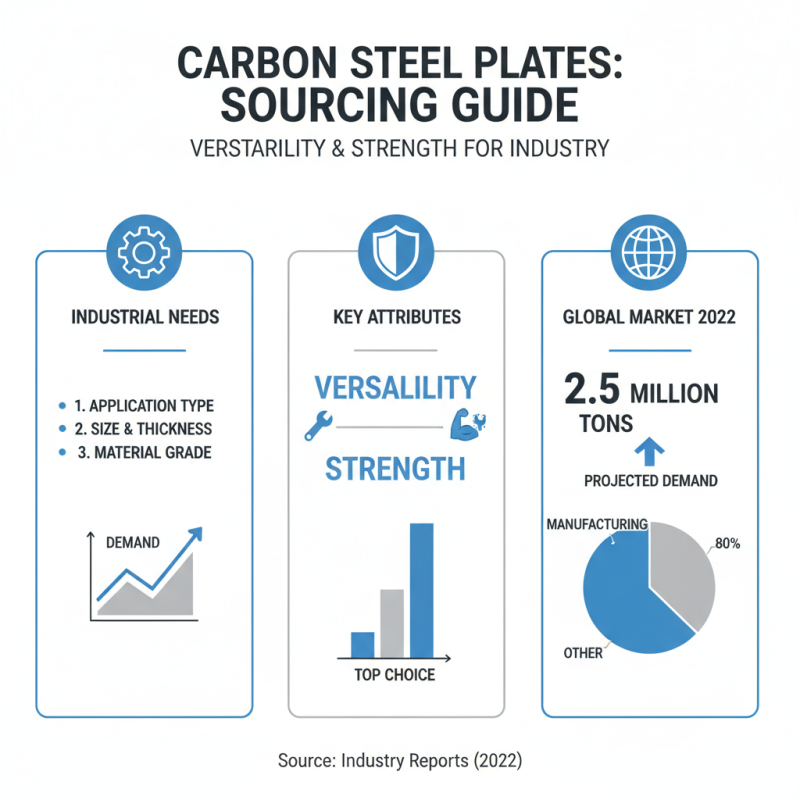
Sourcing carbon steel plates requires careful consideration of your industrial needs. Industry reports suggest that carbon steel, due to its versatility and strength, remains a top choice for various applications. In 2022, global demand for carbon steel plates was projected to reach 2.5 million tons. This is a clear indicator of its pivotal role in manufacturing.
While sourcing, it’s important to examine the specifications closely. The chemical composition can vary, impacting the steel’s hardness and weldability. Many projects fail because attention to these details is overlooked. For instance, a discrepancy in tensile strength can lead to structural failures, and the consequences can be severe. Engaging with suppliers who provide comprehensive material data can mitigate this risk.
Proper storage and handling are crucial once the plates arrive. A common issue is rust formation when carbon steel is exposed to moisture. Implementing a dry environment with protective coatings can significantly extend the material’s life. Sometimes, companies neglect these best practices, leading to costly replacements later. The goal is to ensure that the steel performs optimally for its intended application, without unnecessary setbacks.



 +86 18865111877