As industries evolve, effective management of Hot Rolled Alloy Spot Inventory has become increasingly crucial. Recent reports indicate that fluctuations in demand and supply can significantly impact inventory levels. For instance, the World Steel Association projected a 3% rise in global steel demand by 2026, emphasizing the need for robust inventory strategies.
Challenges in managing Hot Rolled Alloy Spot Inventory include supply chain disruptions and market volatility. A study conducted by McKinsey highlighted that 60% of manufacturers experienced delays due to unforeseen events. This underscores the necessity for adaptive inventory management practices. Organizations must implement analytics-driven approaches to forecast needs accurately and mitigate risks effectively.
The right balance in inventory levels is essential. Too much stock can lead to increased carrying costs, while too little can result in missed opportunities. As the market dynamics shift, companies should continuously reflect on their inventory practices. Adapting to industry trends and data insights will strengthen their positions in the competitive landscape of hot rolled alloys.

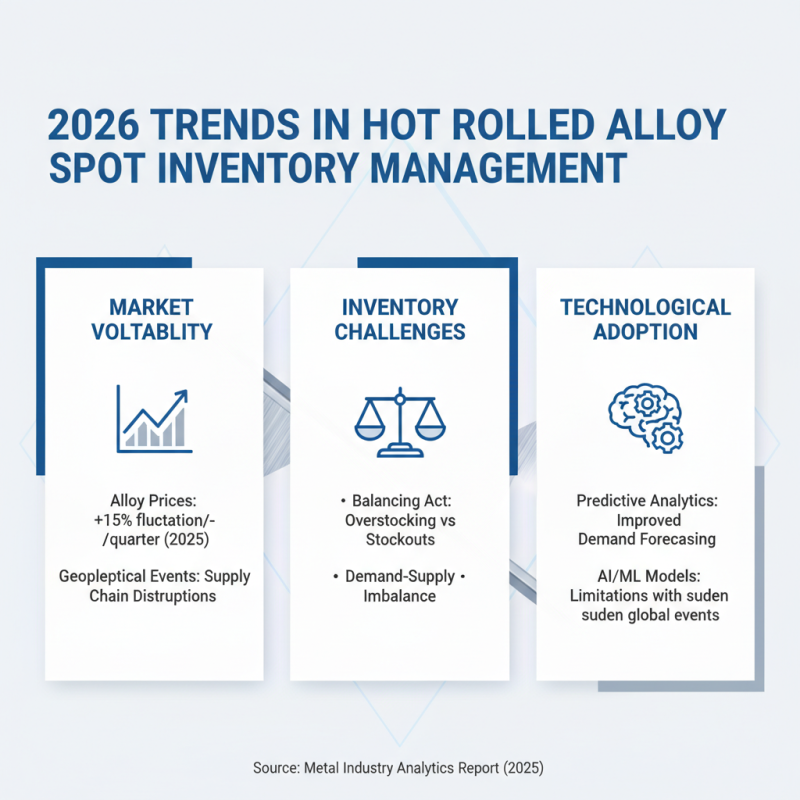
2026 Trends in Hot Rolled Alloy Spot Inventory Management reveal significant shifts driven by market volatility and technological advancements. According to the latest Metal Industry Analytics report, alloy prices have fluctuated by up to 15% within single quarters during 2025. This volatility pressures inventory managers to balance between overstocking and stockouts carefully. Companies increasingly adopt predictive analytics to forecast demand more accurately, but the models still struggle with sudden geopolitical events affecting supply chains.
Data from the Global Steel Inventory Consortium shows that 70% of firms are investing in AI-driven platforms. These tools optimize reorder points and minimize holding costs. However, many implementations face challenges integrating legacy systems, causing delays and data inconsistencies. Real-time tracking through IoT sensors is another growing trend, improving visibility but requiring substantial upfront costs. The balance between technology investment and operational efficiency remains difficult for some mid-sized players.
Sustainability considerations are slowly reshaping inventory practices. According to the Steel Sustainability Report 2025, 40% of companies now evaluate suppliers based on environmental criteria. This shift can lead to inventory delays due to stricter supplier audits. Inventory managers must rethink spot purchasing strategies to accommodate these new standards while maintaining flexibility. The evolving landscape demands continuous learning and adaptation, yet many companies still rely heavily on traditional inventory models that may no longer fit today's dynamic environment.
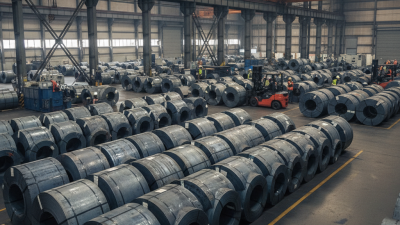
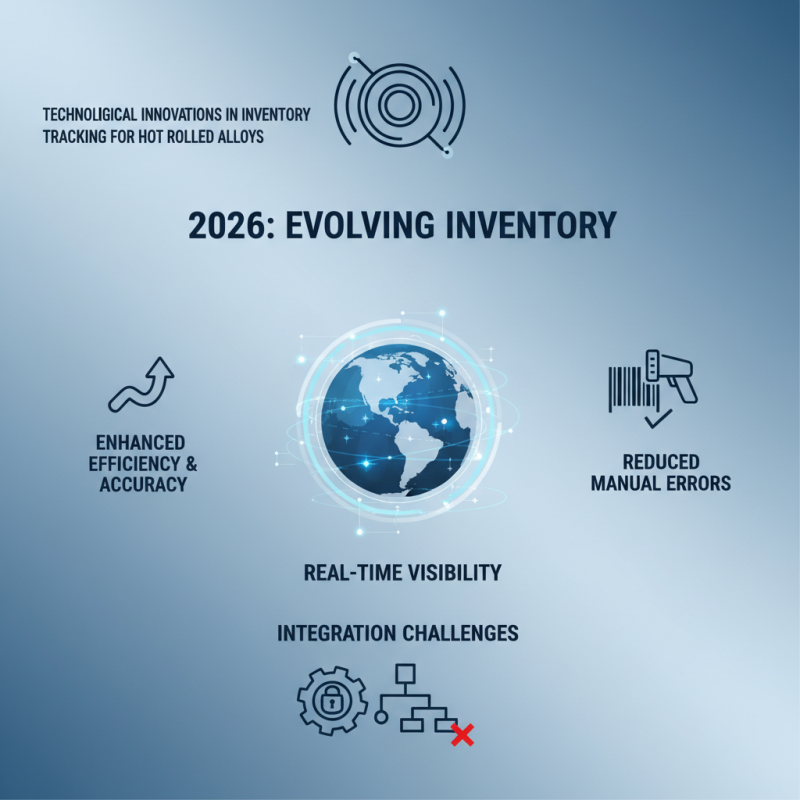
In 2026, the management of hot rolled alloy inventories is evolving rapidly. Companies increasingly rely on advanced tracking technologies to enhance efficiency. These innovations offer real-time visibility, allowing businesses to monitor their stock levels accurately. Enhanced tracking solutions can significantly reduce manual errors, but implementing these systems is not always straightforward. Many companies face integration challenges with existing workflows.
Mobile apps and IoT devices are now common in inventory management. They streamline processes and improve data accessibility. However, the initial setup can be complex, requiring dedicated training and support. Staff may resist changes, fearing job displacement or increased complexity. Addressing these concerns is crucial for successful implementation.
Automation is becoming a game changer. It promises quicker processing and reduced labor costs. Yet, over-reliance on technology can lead to gaps in human oversight. Balancing automation with skilled workforce involvement remains a critical challenge. Continuous evaluation of these technologies is essential for maximizing their potential in hot rolled alloy inventory management.
In 2026, the dynamics of hot rolled alloy inventory management are closely tied to demand forecasting. Accurate demand predictions can drastically improve inventory turnover rates. When manufacturers align production with market needs, they reduce excess stock and minimize carrying costs. Effective strategies often leverage data analytics, capturing trends from historical consumption patterns to inform future needs.
However, the reliance on forecasting methods isn’t without flaws. Algorithms can only predict based on past data, which may not always reflect market shifts or global events. An unpredictable surge in demand or supply chain disruptions can leave businesses scrambling. Companies must remain flexible. They should not solely depend on predictions but also incorporate contingency plans to buffer against unforeseen changes.
Trends indicate a growing emphasis on collaboration between suppliers and clients. Effective communication channels can enhance responsiveness to demand fluctuations. Inventory strategies must reflect agility. Businesses need to rethink traditional approaches, promoting an environment that embraces uncertainty and allows for quick adjustments. Applying these principles may not eliminate challenges, but they will certainly help in navigating the complex landscape of 2026's alloy inventory management.
| Trend | Description | Impact on Inventory | Forecasting Technique | Expected Outcome |
|---|---|---|---|---|
| Increased Automation | Utilizing automated systems to track inventory levels in real-time. | Enhances accuracy in inventory management. | Machine Learning Algorithms | Reduction in excess inventory. |
| Data-Driven Decisions | Leveraging data analytics to inform inventory strategies based on market trends. | Improved stock turnover rates. | Predictive Analytics | Higher profit margins due to optimized stock levels. |
| Collaboration with Suppliers | Working closely with suppliers to align production schedules and inventory needs. | Decreased lead times and enhanced supply chain flexibility. | Collaborative Forecasting | Higher service levels and customer satisfaction. |
| Sustainability Practices | Incorporating sustainable practices into inventory management. | Reduction in waste and improved brand image. | Scenario Planning | Enhanced corporate responsibility and compliance. |
| Just-In-Time (JIT) Inventory | Adopting JIT systems to minimize inventory holding costs. | Streamlined inventory flow. | Real-Time Demand Monitoring | Cost savings and increased efficiency. |
Sustainability is becoming crucial in hot rolled alloy inventory management. Companies are now adopting eco-friendly practices. This shift is driven by the need to reduce waste and minimize energy use. Reducing carbon footprints is essential in today’s industrial landscape. It's not just about profits anymore; it’s about ethical responsibility.
Implementing recycling initiatives helps manage alloy inventories more effectively. Increased recycling can lead to significant cost savings. However, it can be challenging to adapt existing systems. Many companies still depend on conventional processes. This reliance may hinder progress toward environmental goals. Training staff on sustainable practices can create a more aware workforce.
Monitoring sustainability metrics is essential for success. Tracking energy usage and waste output provides valuable insights. The data can identify areas for improvement. Regular assessments can uncover inefficiencies in the inventory process. However, many organizations struggle to integrate sustainability into their core strategies. The commitment to eco-friendly practices requires ongoing effort and reflection from all involved.
Data analytics is transforming how industries manage hot rolled alloy inventory. Understanding inventory levels can prevent excess stock and minimize costs. Predictive analytics helps in forecasting demand. Companies can adjust their stock accordingly. This tailored approach ensures they have enough materials without overcommitting.
Utilizing data visualizations allows for quicker insights. Managers can spot trends easily. However, relying solely on analytics without human intuition can lead to misalignments. Real-time data can sometimes be misleading if not contextualized.
Companies often overlook integrating qualitative assessments with quantitative data. This gap may result in missed opportunities for optimization. Regularly refining analytical models is vital. Outdated algorithms may skew results. Balancing data-driven decisions with experienced judgment tends to yield the best outcomes.