Top 10 Benefits of Using Hot Rolled Steel Plate from Factories
The significance of utilizing hot rolled steel plates cannot be overstated. According to a recent industry report by the World Steel Association, the global steel market was valued at approximately $1.1 trillion in 2022, with hot rolled steel accounting for a substantial portion of this sector. Hot rolled steel plates, produced in factories with advanced technology, offer a range of benefits that can enhance manufacturing processes.
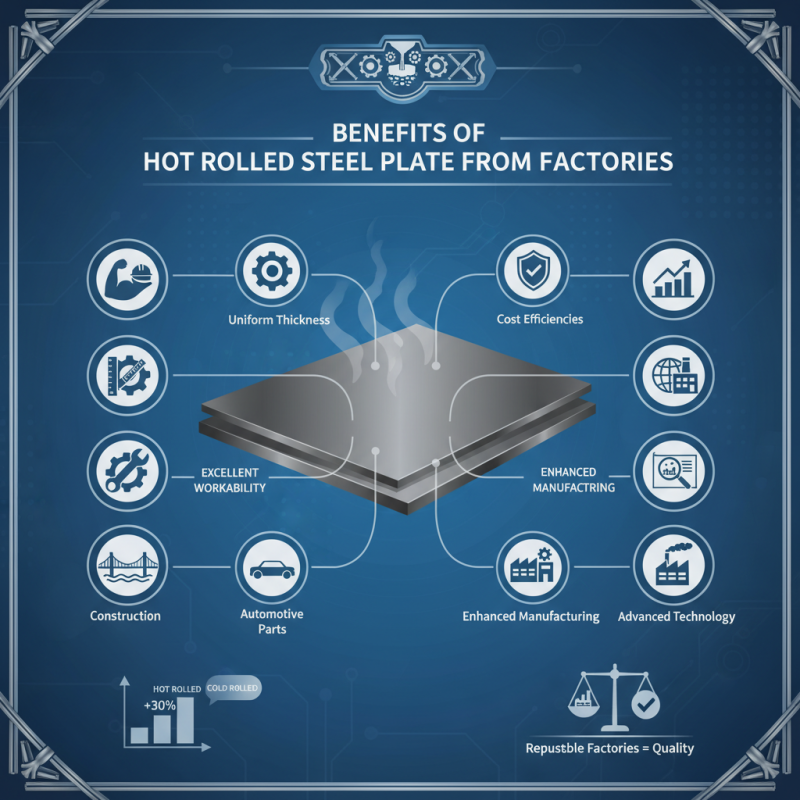
Hot rolled steel plate factories leverage state-of-the-art equipment to produce high-quality materials. These plates are known for their excellent workability and uniform thickness. They provide strength and durability essential for construction and fabrication. A study reveals that hot rolled steel can improve structural integrity by up to 30% compared to cold-rolled alternatives. However, it's vital to acknowledge that not all factories meet the same standards, which can lead to variable quality.
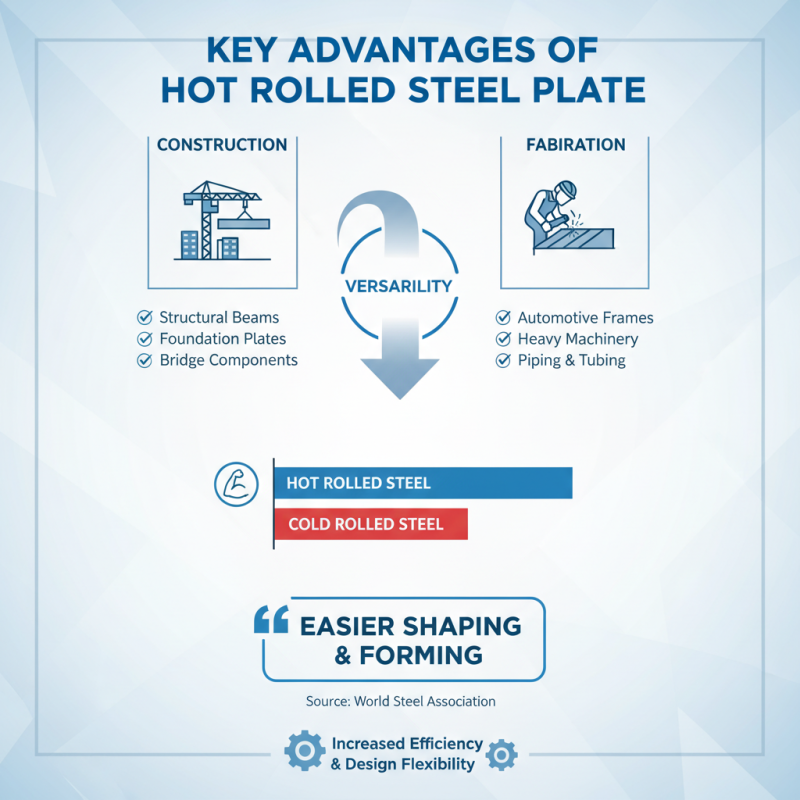
Incorporating hot rolled steel in projects can lead to cost efficiencies. This steel's versatility allows it to be used in various applications, from bridges to automotive parts. Yet, the choice of factory affects the end product. Relying on reputable hot rolled steel plate factories ensures a balance between performance and reliability, essential for any successful project.
Overview of Hot Rolled Steel Plate and Its Manufacturing Process
Hot rolled steel plate is a fundamental material in construction and manufacturing. Understanding its production process reveals significant insights into its advantages. The manufacturing begins with heating steel billets to over over 1,700°F. This intense heat allows the steel to be easily shaped and transformed. After heating, the steel is rolled into sheets through a series of rollers. The rolling process reduces the thickness and increases the length of the plates.
Once cooled, these plates have unique properties. Hot rolled steel typically shows a rough surface finish, which is less precise compared to cold rolled alternatives. While this might limit aesthetic applications, it enhances durability for structural uses. The cost-effective nature of hot rolled steel also plays a crucial role in its selection for large projects. However, the rough edges and surface scaling can pose challenges. Manufacturers must balance these imperfections with practicality, ensuring the right quality for various applications. Through this thoughtful process, hot rolled steel becomes an indispensable asset in industries worldwide.
Key Advantages of Hot Rolled Steel Plate in Construction and Fabrication
Hot rolled steel plates are essential in construction and fabrication. They offer significant advantages that enhance project efficiency. According to a report by the World Steel Association, hot rolled steel has better flexibility and malleability compared to cold rolled alternatives. This property allows for easier shaping and forming, meeting diverse design needs.
Heat treatment during the rolling process improves the steel's toughness. This leads to enhanced durability, making it ideal for structural applications. Projects often require materials that can withstand stress and strain, and hot rolled steel plates excel in this regard. The ability to customize thickness and size further adds to their appeal. With a lower cost of production, hot rolled steel is also more economical, helping to reduce overall project expenses.
**Tips:** Always verify material specifications with your suppliers before starting a project. Understanding the steel's mechanical properties can help in making informed decisions. Regular inspections during fabrication ensure that the quality standards are met.
Despite these strengths, there are situations where imperfections may arise. Surface finish may not be as smooth as cold rolled steel, which can affect aesthetic applications. Assess the specific requirements of your project to determine the best approach. Working with an expert might help in navigating these challenges effectively.
Cost-Effectiveness: Economic Benefits of Using Hot Rolled Steel Plate
Hot rolled steel plate offers significant cost-effectiveness for industries. According to a report by the American Institute of Steel Construction, hot rolled steel can reduce material costs by up to 20%. This is crucial for manufacturers looking to optimize their budgets. The manufacturing process itself allows for mass production, which leads to economies of scale that further lower costs.
Another key aspect is the versatility of hot rolled steel. Its lower production costs make it a preferred choice for various applications, such as construction and automotive industries. Data from the World Steel Association indicates that hot rolled steel accounts for more than 50% of steel production globally. This trend suggests a strong market reliance on its economic benefits.
However, there are challenges. The quality of hot rolled steel can vary based on factors like temperature and processing conditions. Consistency in quality control is essential. Buyers must remain vigilant and consider testing sources to ensure they meet their project's specifications. This added step can mitigate potential risks but may lead to increased upfront costs.
Top 10 Benefits of Using Hot Rolled Steel Plate from Factories - Cost-Effectiveness: Economic Benefits of Using Hot Rolled Steel Plate
| Benefit |
Description |
Economic Impact |
Example Usage |
| Cost Efficiency |
Lower manufacturing costs due to reduced processing time. |
Reduces overall project costs. |
Construction projects. |
| High Availability |
Widely produced and available in various specifications. |
Facilitates timely project completion. |
Manufacturing industries. |
| Versatility |
Can be used in a range of applications. |
Increases value for diverse projects. |
Automotive components. |
| Strength and Durability |
Offers superior strength compared to cold-rolled steel. |
Reduces maintenance costs. |
Structural frames. |
| Reduced Waste |
Cut to specific sizes, minimizing scrap. |
Lowers material costs. |
Custom fabrication. |
| Ease of Machining |
Process easily due to its uniformity. |
Saves time in fabrication processes. |
Metalworking shops. |
| Consistent Quality |
Manufactured under controlled processes. |
Minimizes costly defects. |
Quality control applications. |
| Improved Thermal Properties |
Excellent heat conduction. |
Enhances energy efficiency. |
Heat exchangers. |
| Lower Production Costs |
Faster production cycles due to easy processing. |
Allows competitive pricing. |
Consumer goods manufacturing. |
| Eco-Friendly Option |
Recyclable material; reduces landfill waste. |
Potential cost savings in waste management. |
Sustainability initiatives. |
Durability and Strength: Why Hot Rolled Steel Plate Outperforms Other Materials
Hot rolled steel plate is renowned for its durability and strength, making it a preferred choice in various industries. The American Iron and Steel Institute notes that hot rolled steel exhibits superior mechanical properties, with high tensile strength exceeding 400 MPa. This strength allows it to withstand significant stress and impact, which is crucial in sectors such as construction and manufacturing.
Furthermore, hot rolled steel plate has a unique advantage due to its ability to retain structural integrity at high temperatures. According to a report from the Steel Alliance, this property is vital for applications exposed to intense heat, such as automotive and shipbuilding. Its ability to endure such conditions can reduce the risk of material failure—a comforting statistic for project managers who prioritize safety and reliability.
Despite its benefits, one must consider certain trade-offs. Hot rolled steel can have a rough surface finish, which may not be suitable for aesthetic purposes. Additionally, it is susceptible to corrosion if not adequately protected. Therefore, while hot rolled steel plate excels in strength and durability, careful attention to its surface treatment is necessary to maximize its lifespan in demanding environments.
Top 10 Benefits of Using Hot Rolled Steel Plate
This chart illustrates the top 10 benefits of using hot rolled steel plates, indicating their high ratings in durability, strength, and other essential factors that contribute to their performance and reliability in various applications.
Versatility of Hot Rolled Steel Plate in Various Industrial Applications
Hot rolled steel plates are widely recognized for their versatility in various industrial applications. Their ability to be easily shaped and formed makes them an essential material in construction, manufacturing, and automotive industries. These plates are durable and can withstand significant stress. Their resistance to deformation under high temperatures is a key feature that engineers appreciate.
In construction, hot rolled steel plates are often used in the frames of buildings and bridges. This strong material provides the support needed for large structures. The plates can be cut and welded into different shapes, allowing for creative designs. Additionally, in the automotive industry, these plates are used to create parts of vehicles, contributing to vehicle safety and performance.
Despite their benefits, the use of hot rolled steel plates does come with challenges. For instance, they may rust if not properly treated. It is essential for manufacturers to find ways to protect these plates against corrosion. Furthermore, the production process can be energy-intensive. As industries evolve, finding more sustainable practices in steel manufacturing remains a priority. Balancing performance and environmental impact is crucial for the future of hot rolled steel plates.



 +86 18865111877