Digital Insights on the Best Hot-Rolled Coil Products Available?
In the ever-evolving world of metal products, Hot-Rolled Coil stands out for its versatility and strength. Industries ranging from construction to automotive rely on these coils for a variety of applications. Hot-Rolled Coil products are favored for their ability to be easily manipulated during manufacturing. They provide a robust foundation for countless structures and components, yet selecting the best grade involves careful consideration.
Understanding the key features of Hot-Rolled Coil can significantly impact project outcomes. Factors such as thickness, width, and surface finish play crucial roles in performance. Clients often seek reliable sources for high-quality materials, emphasizing the importance of supplier reputation. However, not all products labeled as Hot-Rolled Coil meet the necessary standards. Scrutiny is vital when navigating the market.
As demands grow, the landscape of Hot-Rolled Coil products continuously changes. Innovations can lead to improved versions, but not every new offering guarantees excellence. Stakeholders must remain vigilant. Achieving the optimal balance between cost and quality requires ongoing research and assessment in this competitive field.

Overview of Hot-Rolled Coil Products in the Market
Hot-rolled coil products play a vital role in various industries, offering flexibility and strength in manufacturing. These products are produced by heating steel above its recrystallization temperature and then rolling it into coils. This process results in a wide array of thicknesses and widths, catering to diverse applications such as construction, automotive, and machinery.
The market for hot-rolled coils features several options. Manufacturers focus on optimal mechanical properties and surface quality. While many provide reliable products, not all meet the same standards. It can be challenging to discern the best options without in-depth research. Factors like chemical composition, yield strength, and thickness variations are crucial. Customers should consider specific project requirements when selecting a product.
Despite advancements in production, imperfections still exist. Some rolls may exhibit surface defects or inconsistencies. It is essential for buyers to conduct thorough inspections. Feedback from professionals in the field highlights the need for quality assurance and improvement. Engaging directly with suppliers can provide valuable insight into their processes and standards. Understanding these nuances helps ensure better purchasing decisions in a competitive market.
Key Characteristics and Benefits of Hot-Rolled Coils
Hot-rolled coils (HRC) play a critical role in various industries, from automotive to construction. They are made by rolling steel at high temperatures, enhancing ductility. This process results in a strong product that can withstand significant stress. According to a report from the World Steel Association, over 1.8 billion tons of steel were produced in 2021, with hot-rolled steel constituting a substantial portion of this output. This data highlights the widespread support for HRCs due to their utility.
One significant characteristic of hot-rolled coils is their cost-effectiveness. They typically require less processing than cold-rolled products. As a result, companies can save on manufacturing expenses. However, the surface finish may not be as smooth as cold-rolled alternatives, potentially affecting aesthetics. Therefore, manufacturers must weigh the importance of appearance against cost.
Moreover, the dimensional tolerance of hot-rolled coils is less precise compared to cold-rolled. This can lead to challenges in applications requiring tight specifications. However, for many industries, the robustness and ease of production outweigh these drawbacks. According to data from the American Iron and Steel Institute, HRC prices saw fluctuation trends, indicating market dynamics that businesses must be aware of when sourcing materials. While hot-rolled coils offer a multitude of benefits, they may not suit every application. Understanding these characteristics is crucial for making informed decisions.
Digital Insights on the Best Hot-Rolled Coil Products Available
This chart presents key characteristics of some of the best hot-rolled coil products available, focusing on tensile strength and weight per square meter. The data illustrates the variations in material properties, which are critical for selecting the best hot-rolled coils for various applications.
Top Manufacturers and Their Leading Hot-Rolled Coil Products
The hot-rolled coil (HRC) market is ever-evolving, driven by global demand. In 2022, the market was valued at approximately $220 billion, projected to rise significantly. Various manufacturers dominate this landscape, each offering unique qualities and specifications. Domestic production is vital, with several players investing in state-of-the-art technologies.
Among leading manufacturers, the focus is on high-strength, lightweight materials. Products often meet stringent standards, enhancing durability. Recent reports indicate that the demand for advanced high-strength steel (AHSS) continues to rise, contributing to sustainability efforts in various industries. It’s notable that while prices fluctuate, quality remains essential. Ensuring compliance with international standards can sometimes be a challenge.
However, not all products are created equal. Some manufacturers struggle with consistency in their coil widths and thicknesses. This inconsistency could impact end-user satisfaction significantly. As the market adapts to evolving demands, staying abreast of industry trends is paramount for sourcing reliable HRC products. Data suggest that about 30% of buyers prioritize sourcing from manufacturers with a robust track record. This trend underscores the importance of reputation and expertise in selecting dependable hot-rolled coil products.
Digital Insights on the Best Hot-Rolled Coil Products Available
| Product Type |
Thickness (mm) |
Width (mm) |
Length (mm) |
Weight (kg) |
Quality Standard |
| Hot-Rolled Coil A |
2.0 |
1250 |
6000 |
5000 |
ASTM A568 |
| Hot-Rolled Coil B |
3.0 |
1500 |
8000 |
10000 |
EN 10130 |
| Hot-Rolled Coil C |
4.0 |
2000 |
12000 |
15000 |
JIS G3131 |
| Hot-Rolled Coil D |
5.0 |
1800 |
10000 |
12000 |
GB/T 709 |
Market Trends Influencing Hot-Rolled Coil Demand
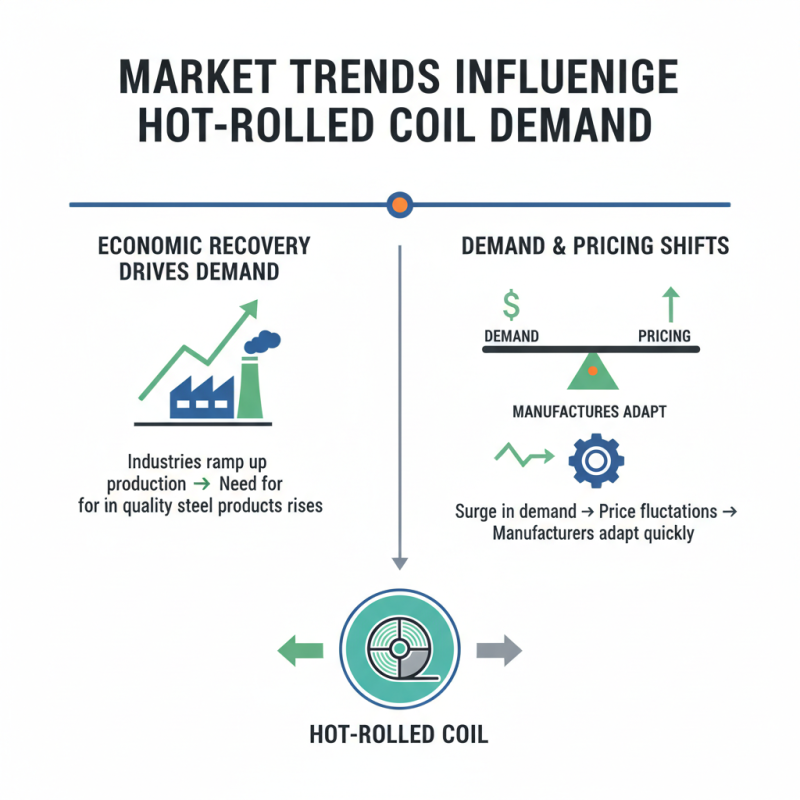
The demand for hot-rolled coils is heavily influenced by various market trends. One key factor is the economic recovery in multiple sectors. As industries ramp up production, the need for quality steel products increases. This surge in demand often causes fluctuations in pricing. In turn, manufacturers must adapt quickly to these changes.
Additionally, infrastructure projects are on the rise in many regions. Governments are investing in roads, bridges, and buildings. These projects require substantial amounts of hot-rolled coils. However, supply chain constraints can hinder timely delivery. Companies struggle to balance rising costs with the need for efficiency.
Sustainability is also becoming crucial. Consumers and regulators emphasize eco-friendly practices. Manufacturers are exploring greener production methods. This transition presents challenges and opportunities. Companies must innovate to reduce their carbon footprint. Engaging with new technologies can create competitive advantages. Adjusting strategies in response to market dynamics is vital.
Comparative Analysis of Hot-Rolled Coil Products Available Today
In recent years, the hot-rolled coil market has seen significant evolution. According to a 2022 industry report, global demand for hot-rolled coils is expected to grow at a CAGR of 3.2% until 2027. This trend emphasizes the importance of optimizing product quality and performance. Manufacturers are focusing on improving tensile strength, surface quality, and thickness precision to better meet industry standards.
Comparison among available products reveals critical variances. Notably, hot-rolled coils are assessed based on yield point and elongation properties. Data indicates that the best-performing products demonstrate yield strengths above 350 MPa. These metrics greatly influence their suitability for various applications, including automotive and structural uses. However, inconsistencies in thermal treatment processes among suppliers present challenges. These variations can lead to unpredictable results in mechanical properties, necessitating deeper scrutiny by purchasing decisions.
Moreover, feedback from engineers highlights the need for standardization in manufacturing processes. Many users report difficulties related to surface defects or inconsistent thickness from certain suppliers. Addressing these issues is vital for enhancing the reliability of hot-rolled products. The market is evolving, but the focus on quality assurance remains imperative for long-term growth in the hot-rolled coil sector.






 +86 18865111877