Hot Rolled Steel Carbon Plates are essential in various industries. These plates offer excellent strength and flexibility. According to industry expert Dr. Emily Chen, "Quality in Hot Rolled Steel Carbon Plates can make or break a project."
In today's market, choosing the right steel plate is critical. Numerous options may confuse buyers. But understanding the properties of Hot Rolled Steel Carbon Plates is key. They provide a balance of durability and cost-effectiveness. Buyers often overlook the significance of sourcing from reputable suppliers.
Selecting the best plate requires attention. The right choice can affect everything from construction safety to project timelines. Not all plates are created equal. Some may not meet industry standards, leading to potential setbacks. Careful consideration in selection can improve overall project success. Remember, quality matters.
Hot rolled steel carbon plates are essential in various industries. These plates are known for their strength and durability. They undergo a specific process that enhances their properties. The key features include excellent tensile strength and machinability. Using these plates can lead to cost-effective solutions in construction and manufacturing.
One should consider the thickness and width based on project requirements. Heavier plates can withstand greater stress. However, they may be harder to handle. It’s also crucial to check for proper finishes. A rough finish may affect the welding process. Choosing the right plate sometimes requires careful thought.
The benefits of hot rolled steel carbon plates are significant. They offer excellent workability for bending and forming. Additionally, they resist warping better than cold rolled options. This is vital for precision in applications. Their availability in various sizes is another advantage. However, one must be aware of the quality variations. Always inspect the material for imperfections. It’s easy to overlook details, which can lead to larger issues later.
Hot rolled steel carbon plates are essential in various industries. They come in different grades, each suited for specific applications. Understanding these grades can help make informed choices. For instance, low-carbon plates generally feature better ductility, making them easier to work with. However, they may not always provide the strength needed for heavy-duty applications.
Medium and high-carbon plates offer increased strength and wear resistance. These are often utilized in construction and manufacturing processes. Yet, with their strength comes a trade-off: they can be less malleable. Users might find themselves grappling with the right balance for their projects. Some grades are more susceptible to rust, adding another layer of consideration for outdoor use.
While hot rolled plates can be cost-effective, selecting the right grade requires careful thought. It's not merely about price but the steel's performance in real-world conditions. Many overlook the nuances when choosing these materials. It’s crucial to weigh properties like tensile strength and hardness against project requirements. Missing these details could lead to failures or increased costs.
| Grade | Thickness (mm) | Width (mm) | Length (mm) | Yield Strength (MPa) | Ultimate Strength (MPa) | Elongation (%) |
|---|---|---|---|---|---|---|
| A36 | 6 | 1500 | 6000 | 250 | 400-550 | 21 |
| S235JR | 8 | 1250 | 3000 | 235 | 360-510 | 26 |
| Q235 | 10 | 1000 | 5000 | 235 | 370-510 | 22 |
| A992 | 12 | 2000 | 6000 | 345 | 450-620 | 20 |
| SS400 | 15 | 1000 | 3000 | 245 | 400-560 | 18 |
| A572 | 20 | 1250 | 6000 | 345 | 450-620 | 20 |
| S275 | 25 | 1500 | 6000 | 275 | 430-580 | 23 |
| C45 | 30 | 2000 | 6000 | 400 | 580-780 | 16 |
| S355 | 35 | 1500 | 6000 | 355 | 470-630 | 22 |
| A588 | 40 | 1000 | 3000 | 345 | 450-620 | 20 |
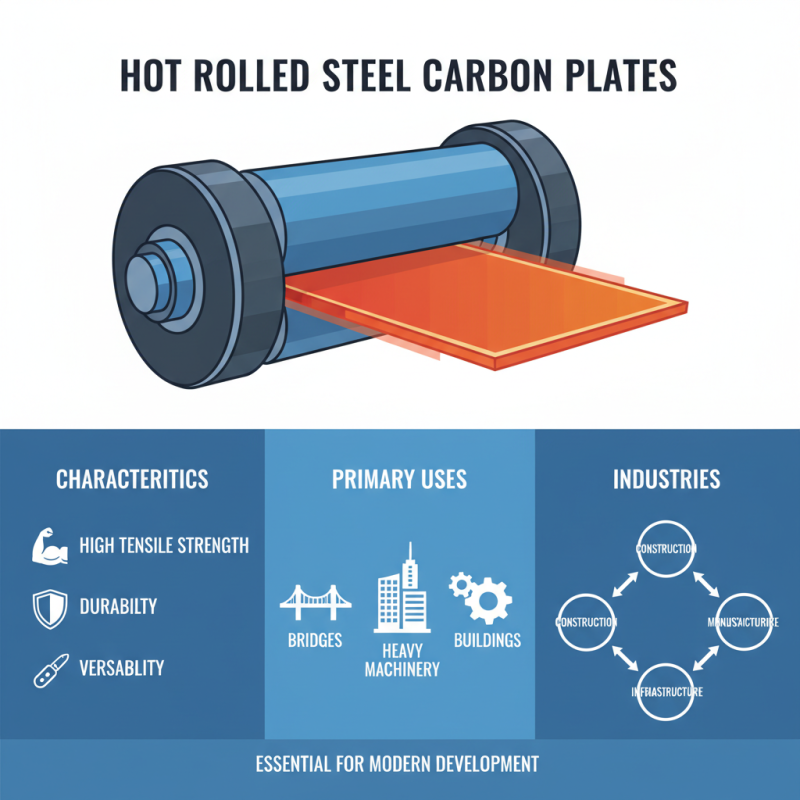
Hot rolled steel carbon plates are widely used in various industries. Their strength and versatility make them ideal for construction and manufacturing. These plates can be found in bridges, buildings, and heavy machinery. They offer excellent tensile strength, making them perfect for structural applications.
In automotive manufacturing, hot rolled steel is essential. Car bodies and chassis often use these plates for their durability. The manufacturing process allows for easy shaping and welding, which is crucial in vehicle assembly. Additionally, the plates can withstand harsh conditions, enhancing the vehicle's lifespan.
**Tips:** When selecting hot rolled steel, consider the thickness needed for your project. Too thin might compromise strength. Meanwhile, always inspect the surface for defects. A better surface leads to stronger welds. If you’re new to this material, seek guidance from industry experts.
Another application is in oil and gas pipelines. Hot rolled plates resist extreme temperatures and pressures. However, proper maintenance is key. Corrosion can be a concern over time. Regular inspections will help in identifying potential issues early. This ensures safety and functionality in critical infrastructure projects.
When comparing hot rolled steel carbon plates, performance metrics play a crucial role. Different grades offer varied strength, flexibility, and weldability. It's essential to understand these characteristics to make an informed choice.
Cost analysis is equally important. Prices can differ based on thickness and finish. Even slight variations in quality can lead to significant cost differences. Make sure you are getting the value you expect for your investment.
Tips: Check the specifications thoroughly. Don't focus solely on the price. Sometimes, a higher price reflects better longevity.
When evaluating performance, consider how each plate holds up under stress. Dents, warping, and rust resistance are key factors. Reflect on past purchases. Did the plate perform as expected? Maybe it didn't, and that's a lesson worth noting.
Tips: Always ask for samples when possible. This helps in understanding the actual material quality. Real-world testing can reveal flaws that specifications don't show.
In conclusion, weighing both cost and performance metrics is essential when selecting hot rolled steel carbon plates. Balancing these factors will help ensure your project’s success.
When selecting hot rolled steel carbon plates for projects, several factors come into play. One critical aspect is the intended application. Different projects require varying thicknesses and dimensions. For instance, structural applications may need thicker plates, while lighter applications may work with thinner ones. Understanding these needs is vital to avoid overspending or underutilizing materials.
Another important consideration is the properties of the steel itself. Carbon content affects strength and workability. A higher carbon content typically enhances hardness but may reduce ductility. This trade-off can be crucial in determining the plate’s performance in real-world conditions. Additionally, factors like weldability and corrosion resistance also influence decisions. Improper choices here can lead to significant project challenges.
Cost is often a primary concern, yet it should not overshadow quality. Cheaper options may save money upfront, but they could lead to future failures. Balancing budget constraints with quality requirements is tricky. It’s essential to evaluate suppliers and material standards carefully. Every choice impacts project outcomes, and reflecting on past experiences can guide better decisions. This practice fosters learning and emphasizes the importance of due diligence.
This chart displays the thickness and strength of the top 10 hot rolled steel carbon plates, providing insight into the factors influencing their selection in various projects.