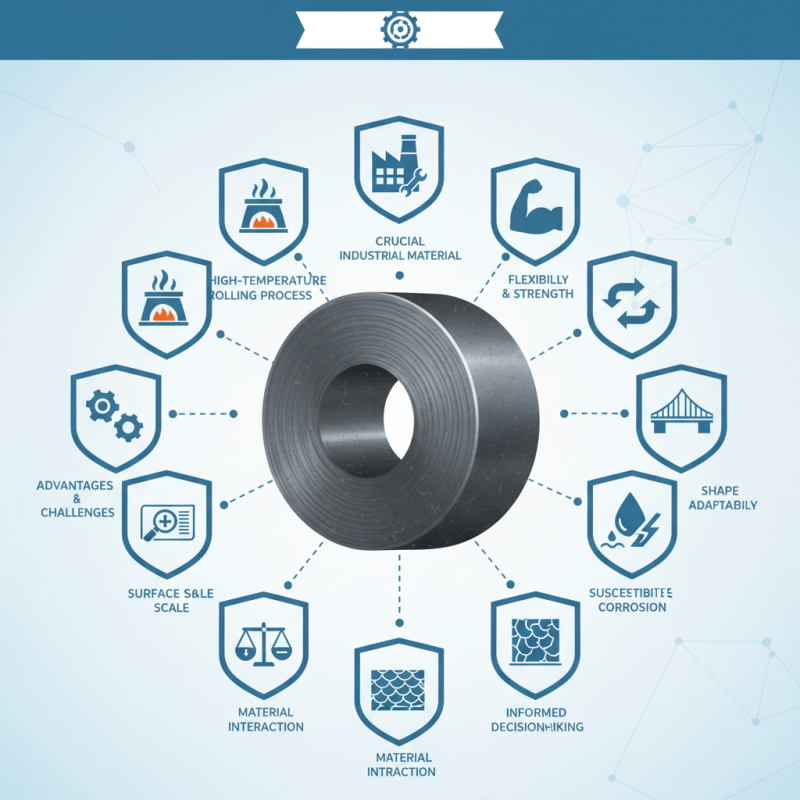
Hot Rolled Mild Steel Coil is a crucial material in many industries. Understanding its properties and advantages is essential. This steel coil is produced through a process that involves rolling at high temperatures. This technique gives it unique characteristics that are often needed for construction and manufacturing.
These coils offer flexibility and strength, making them ideal for various applications. Their ability to undergo changes in shape and size without losing integrity is impressive. However, users must be aware of some limitations, such as susceptibility to corrosion. Additionally, the production process leaves a scale on the surface that can affect its appearance.
Knowledge of Hot Rolled Mild Steel Coil can enhance decision-making for projects. It is not just about selecting a material; it involves understanding how it interacts with other elements. The more informed you are, the better the results will be. Always consider both the advantages and challenges when working with this versatile material.
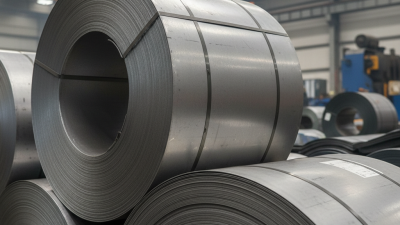
Hot rolled mild steel coil is a popular material in many industries. Its primary characteristic is malleability. This property allows it to be shaped easily at high temperatures. The manufacturing process involves heating the steel above its recrystallization temperature. Once heated, it is rolled into coils, making transportation and storage efficient.
The composition of hot rolled mild steel typically includes iron and carbon. The low carbon content enhances its ductility and weldability. However, this also means it can be less durable than high-carbon steels. The surface of hot rolled steel often has a rough finish, which may be a drawback in some applications. Many industries choose to use a protective coating or additional finishing processes to address this issue.
Understanding the properties of hot rolled mild steel coil is crucial. It affects everything from construction uses to automotive manufacturing. Despite its advantages, improper handling can lead to deformation. Buyers should remain aware of these nuances. The material is versatile but requires careful consideration in its applications.
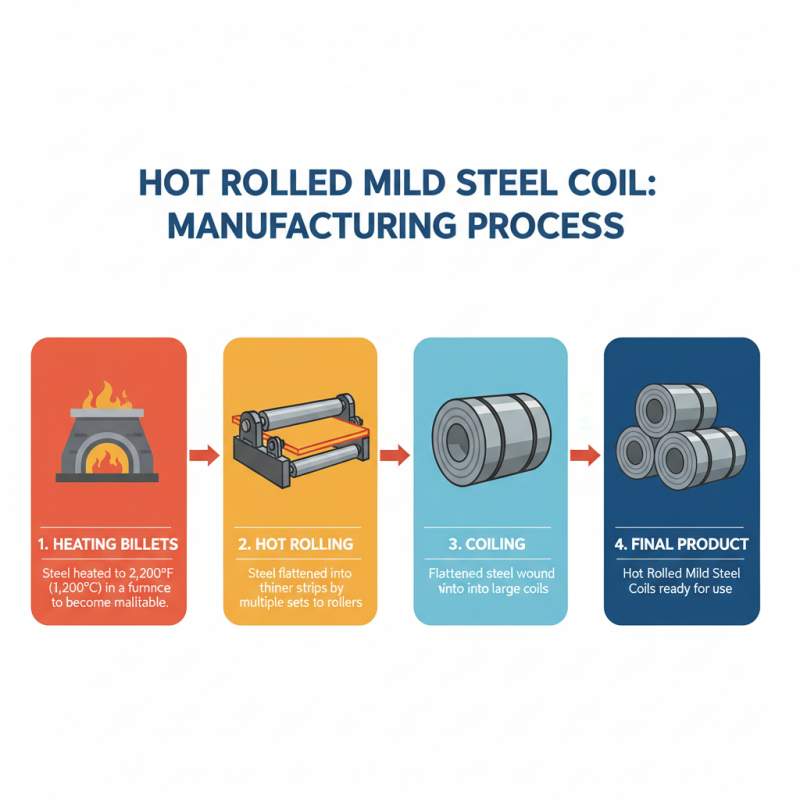
Hot rolled mild steel coils undergo a fascinating manufacturing process that transforms raw materials into useful products. The process begins with heating steel billets in a furnace at high temperatures, usually around 2,200°F. This heating makes the steel more malleable. Once the steel reaches the desired temperature, it is passed through a series of rollers. These rollers flatten the steel into coils of varying thicknesses. This stage is crucial, as the dimensions and properties of the final product are determined here.
After rolling, the steel coil is cooled. This cooling can affect its mechanical properties. Hot rolled mild steel tends to have a rough finish and may not be as precise as cold rolled options. However, it is often used in construction and manufacturing due to its cost-effectiveness and strength. During this process, some inconsistencies in thickness and surface texture can occur, which require careful inspection. Understanding these nuances can help industries select the right materials for their needs.
Hot rolled mild steel coils are widely used across various industries due to their versatile properties. In construction, these coils are essential for structural beams, columns, and reinforcements. They provide strength and durability to buildings, making them a go-to choice for engineers. The ability of hot rolled mild steel to withstand high stress makes it ideal for skyscrapers and bridges.
In the automotive industry, hot rolled mild steel coils are used for manufacturing body panels, frames, and other components. The process of hot rolling enhances the material’s ductility, making it easier to shape. Yet, there's room for improvement in surface finish, as hot rolled steel may require additional treatment to meet aesthetic standards. Manufacturers often face challenges in balancing cost and quality, especially in high-volume production.
Additionally, the manufacturing of appliances and machinery utilizes hot rolled mild steel. It serves as a reliable choice for parts that require strength without excessive weight. However, the susceptibility to corrosion can be a drawback, necessitating protective coatings in many applications. Overall, while hot rolled mild steel coils provide ample benefits, ongoing innovation is essential to address their limitations.
Hot rolled mild steel coils have distinct advantages over other steel types. They are known for their cost-effectiveness. Due to the manufacturing process, hot rolled steel requires less energy and material than cold rolled alternatives. Energy reports indicate that hot rolled processes can be up to 20% more efficient. This reduction in cost makes it an attractive option for many industries.
Moreover, hot rolled mild steel offers superior workability. It is easier to shape and weld, making it ideal for construction and fabrication projects. Various studies show that structures built with hot rolled steel have enhanced ductility. This property is especially significant in seismic regions, where flexibility is critical. However, the surface finish may not be as smooth, which can be detrimental in applications needing high precision.
Applications often benefit from the strength and durability of hot rolled mild steel. According to industry data, this steel can withstand extreme conditions, contributing to long-lasting structures. Yet, issues like corrosion resistance may arise, necessitating protective coatings. While hot rolled mild steel is versatile, careful consideration of these factors ensures optimal use in any project.
| Fact No. | Description | Advantages |
|---|---|---|
| 1 | Hot rolled mild steel coils are produced at high temperatures, typically above 1700°F. | Easier to form and shape than cold rolled steel. |
| 2 | They have a rough, scaly surface due to the oxidation during the heating process. | Cost-effective for large projects requiring less detailed finish. |
| 3 | The manufacturing process allows for significant reductions in size and weight. | Ideal for heavy-duty applications. |
| 4 | Hot rolled steel tends to have lower yield strength compared to cold rolled counterparts. | Easier to weld and work with for fabrication. |
| 5 | Available in a variety of thicknesses and widths for different applications. | Flexible application across various industries. |
| 6 | The cooling process after rolling leads to a coordinate microstructure. | Less susceptible to deformation during subsequent processes. |
| 7 | Hot rolled steels can warp during cooling due to stress. | Proper handling can mitigate this issue, maintaining structural integrity. |
| 8 | Often used for rail tracks, beams, and other structural components. | Durability in high-stress applications. |
| 9 | Hot rolled coils can be finished in various ways (e.g., pickling, annealing). | Allows customization for specific uses. |
| 10 | Hot rolled mild steel is largely recyclable, supporting sustainability. | Environmentally friendly option in construction and manufacturing. |
Hot rolled mild steel coil products require regular maintenance to ensure longevity. These coils can corrode if exposed to moisture. Therefore, proper storage is crucial. Keep coils in a dry place, preferably under a cover. This helps prevent rust and damage.
Cleaning is another essential part of care. Use a soft brush or cloth to remove dirt and debris. Avoid harsh chemicals that may strip the steel’s protective layer. A diluted soap solution can be effective for tougher stains. After cleaning, dry the surface thoroughly to avoid moisture buildup.
Regular inspections should be part of your routine. Look for signs of rust or wear. Small issues can escalate quickly, leading to larger problems. Practicing proactive maintenance helps you catch these problems early. Even minor scratches can lead to corrosion. Proper care is not just about cleaning; it’s about being aware and reactive.