Top 10 Hrc Coil Applications You Should Know About?
Hrc Coil applications are essential in various industries. These coils offer remarkable durability and versatility, making them popular choices. Understanding their applications can help businesses thrive.
In the automotive sector, Hrc Coils are crucial for manufacturing components. They provide strength and reliability in high-temperature conditions. Similarly, in construction, these coils are often used for structural reinforcement. Their resistance to wear and corrosion proves invaluable.
While the benefits are clear, challenges persist. Some industries may overlook critical specifications. This can lead to costly errors. Therefore, it’s vital to explore the top applications of Hrc Coils. Making informed decisions can enhance efficiency and reduce risks.
Top 10 Applications for HRC Coils in Modern Industries
HRC coils play a vital role in modern industries. They are often used in automotive manufacturing. These coils provide reliable and efficient electrical resistance. In many cases, they contribute to enhanced performance and safety of vehicles. However, their efficiency can vary based on the application.
In construction, HRC coils are used for lifting and rigging applications. They help in managing heavy loads with ease. Precision is critical here. Any miscalculation can lead to accidents. Manufacturers must pay attention to standards and testing. Sometimes they overlook these important details, affecting product quality.
Additionally, these coils find use in energy sectors, particularly in renewable energy systems. Solar and wind applications rely on HRC coils for power generation. Efficiency in energy transfer is a priority. Yet, there are challenges in scaling up production. Companies need to consider both efficiency and environmental impact. Balancing these factors demands constant reflection and improvement.
Steel Manufacturing: Key Uses of HRC Coils in Production Processes
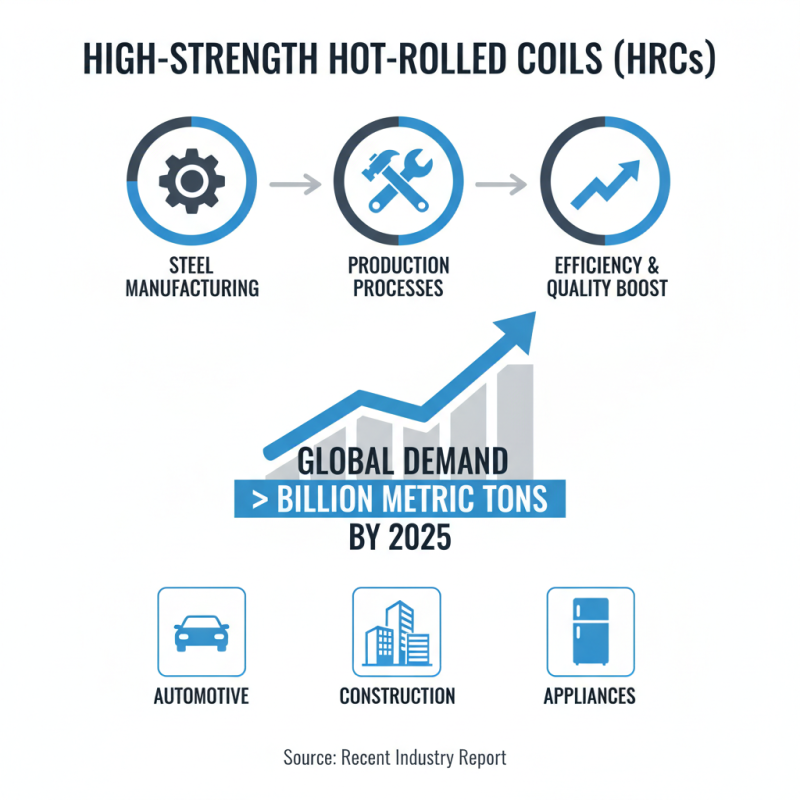
High-Strength Hot-Rolled Coils (HRC) play a vital role in steel manufacturing. In production processes, these coils serve multiple purposes that enhance efficiency and quality. According to a recent industry report, the global HRC demand is expected to exceed 1 billion metric tons by 2025. This growth is driven by sectors like automotive, construction, and appliances.
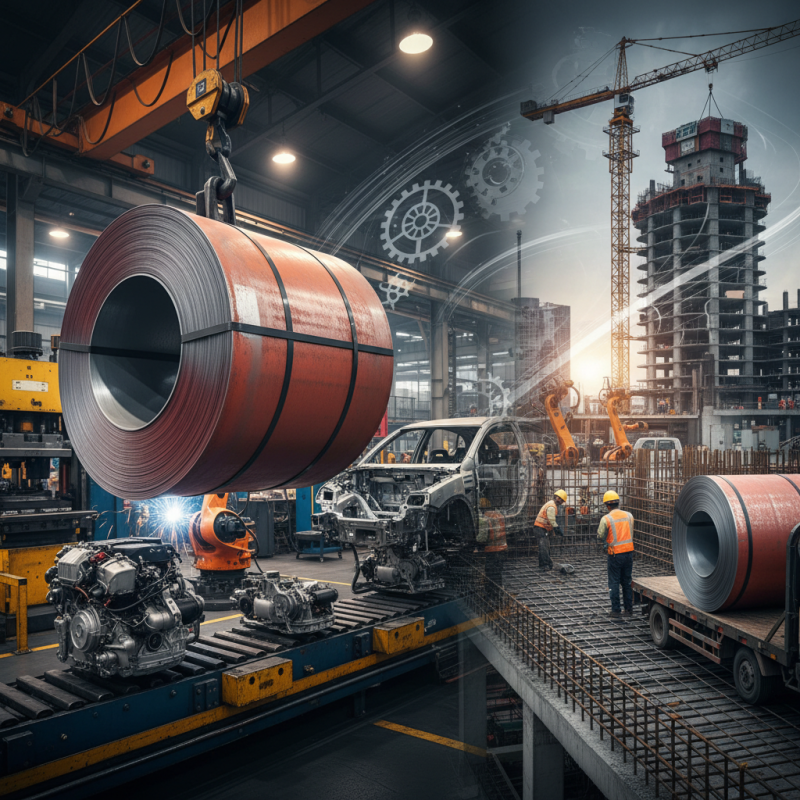
HRC coils are primarily used in automotive applications. They provide strength and flexibility, making them ideal for car frames and body panels. The construction sector utilizes HRC coils for structural beams, enhancing the durability of buildings. In appliances, HRC is crucial for making washers, dryers, and refrigerators, ensuring they withstand everyday use.
Tips for optimizing HRC usage: ensure proper storage to prevent rust and damage. Also, consider the thickness of coils; selecting the correct gauge can lead to material savings. Regularly review your supply chain processes. This can help identify inefficiencies that may result in excess waste. Remember, the quality of HRC directly impacts the final product. Small adjustments can lead to significant improvements in performance and sustainability.
Automotive Industry: How HRC Coils Enhance Structural Integrity
The automotive industry relies heavily on HRC coils for structural integrity. These components play a vital role in enhancing vehicle safety and performance. According to a report from the Automotive Engineering Institute, HRC coils can improve tensile strength by 20%, providing better support in crash scenarios. This data underscores their importance in producing durable automotive parts.
HRC coils are essential for components such as suspension systems and chassis. The increased tensile strength contributes to the overall longevity of vehicles, allowing them to endure stress. A study highlighted that cars equipped with HRC components show a 30% decrease in wear and tear over time. However, the complexity of manufacturing HRC coils can lead to inconsistencies. Some manufacturers struggle to maintain uniform quality, raising concerns in critical applications.
The use of HRC coils also affects weight reduction. By integrating these coils, manufacturers can design lighter vehicles without sacrificing safety. This is crucial as lighter cars enhance fuel efficiency, an area of growing importance. Nonetheless, balancing weight with strength presents challenges. The automotive sector must carefully consider how HRC coils fit into emerging technologies, including electric vehicles. Each choice carries risks and rewards that need assessment.
Top 10 HRC Coil Applications in the Automotive Industry
The bar chart above showcases the top 10 applications of HRC coils in the automotive industry, focusing on their effectiveness in enhancing structural integrity. Each application is rated on a scale of 1 to 10 based on its contribution to overall vehicle performance and safety.
Construction Sector: Application of HRC Coils in Building Frameworks
HRC coils play a crucial role in the construction sector, especially in building frameworks. These coils are known for their durability and strength. They provide essential support, ensuring structures are stable and long-lasting. Builders often rely on HRC coils for beams and girders. Their use increases safety in tall buildings.
Incorporating HRC coils is not without challenges. For instance, proper installation is key. If not handled correctly, the structural integrity can suffer. Miscalculations in the amount required could lead to shortages or waste. This makes planning crucial. It's a learning curve that many contractors face.
The adaptability of HRC coils can also be a double-edged sword. While they can be used in various designs, each project is unique. This means adjustments are often necessary. Some engineers might struggle with these modifications. It's important to continuously evaluate techniques and approaches. This reflection helps enhance future projects.
Electrical Sector: Utilization of HRC Coils in Transformer and Lifting Equipment
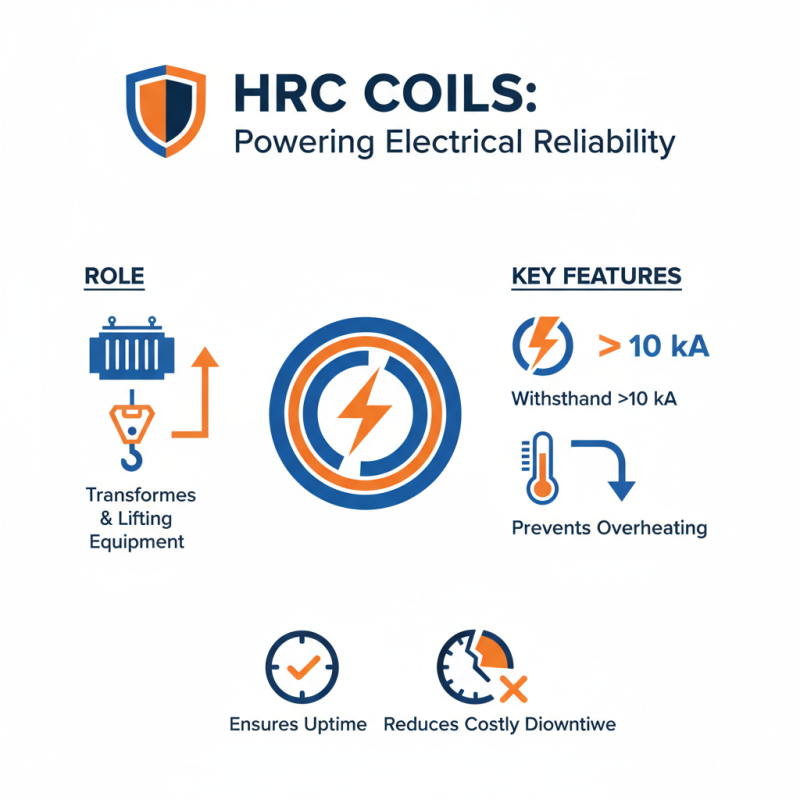
HRC (High Rupturing Capacity) coils play a crucial role in the electrical sector, particularly in transformers and lifting equipment. These coils are designed to handle significant power surges, ensuring safety and reliability. Recent industry reports indicate that HRC coils can withstand currents exceeding 10 kA. This durability is essential for transformers, which require stable operation under varying loads. For instance, poor coil performance can lead to overheating, resulting in costly downtime.
In lifting equipment, HRC coils are vital for maintaining operational integrity. They protect against short circuits and overloads, which can compromise safety. Data from safety audits show that equipment failures due to electrical issues can increase operational costs by up to 25%. Using HRC coils effectively reduces these risks. However, it's worth noting that improper installation can lead to inefficient performance. This highlights the need for skilled technicians in the application of HRC coils.
Ultimately, the reliance on HRC coils in transformers and lifting equipment demonstrates their importance in maintaining safety standards. Yet, as the industry evolves, continuous innovation is necessary. As companies pursue greater efficiency, the challenge remains in balancing advanced technology with reliable, traditional solutions.



 +86 18865111877