7 Best Carbon Steel Sheet Slit Coil Manufacturers?
Choosing a Carbon Steel Sheet Slit Coil manufacturer is not a simple price comparison. It is a decision about width control, edge quality, surface condition, and delivery discipline. A reliable supplier should show more than polished catalog images. Buyers need inspection records, traceable mill certificates, clear tolerances, and practical answers about coil weight, packaging, and storage.
John J. Ferriola, former Nucor Corporation CEO and a respected steel-industry leader, once said, “Quality is our first priority.” That principle matters during slitting. A narrow burr, uneven edge, or poorly secured coil can create trouble on a stamping line. Sometimes, the cheapest offer becomes the most expensive choice.
This guide examines seven leading Carbon Steel Sheet Slit Coil manufacturers through a buyer’s lens. It considers production capacity, steel grades, slit-width accuracy, surface protection, export experience, and customer support. It also looks at details that are easy to overlook, such as core dimensions, coil telescoping, labeling, and moisture protection during shipment.
The ranking is not absolute. Each manufacturer may fit a different application. One may excel in high-volume automotive supply, while another may serve smaller custom orders more carefully. That difference matters.
Some supplier claims deserve a closer look. Certifications help, but they do not replace consistent performance. A strong manufacturer should combine documented systems with evidence from real deliveries. That balance gives manufacturers, fabricators, and distributors a more dependable starting point.
Carbon Steel Sheet Slit Coil: Definition, Grades, and Main Applications
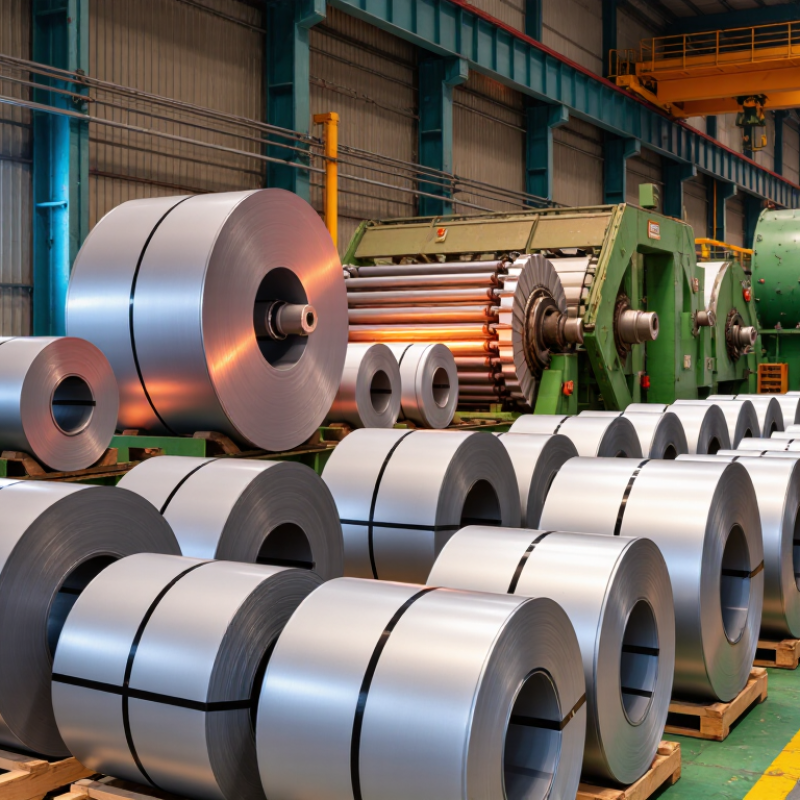
Carbon steel sheet slit coil is wide steel coil cut longitudinally into narrower strips. A slitting line uses circular knives, tension controls, and recoilers to produce consistent widths. Each finished coil may have clean edges, burrs, or slight camber. That detail matters during stamping and roll forming.
Grade selection depends on strength, forming needs, and final service conditions. Low-carbon grades are common for brackets, cabinets, tubes, and general fabrication because they bend easily. HSLA grades provide higher strength at reduced thickness, supporting truck parts, structural frames, and storage equipment. Medium-carbon steel offers greater hardness after treatment, but it is less forgiving during forming. Specifications vary by region and mill practice. Always verify chemistry and mechanical test results.
Applications reveal the practical differences. A 0.8-millimeter slit coil may feed an automated press for appliance panels, while a thicker strip can become a welded pipe or construction component. Surface condition also affects painting, galvanizing, and welding performance. Experienced buyers check width tolerance, coil weight, edge quality, flatness, and traceability before selecting a manufacturer. Packaging must prevent moisture during transport and storage. I have seen narrow coils look perfect externally yet show uneven winding inside. That mistake can stop a production line. Supplier audits, sample slitting trials, and current inspection certificates provide stronger evidence than catalog claims.
Key Criteria for Evaluating Slit Coil Manufacturers
Choosing among the 7 best carbon steel sheet slit coil manufacturers requires more than comparing prices. Start with dimensional control. Ask for slit width tolerances, coil weight ranges, thickness capability, and camber limits. Request recent inspection records, not only a sales specification.
Material traceability is equally important.
Reliable manufacturers provide mill test certificates, heat numbers, chemical analysis, and mechanical property data. Their slitting lines should use calibrated knives and controlled tension systems. Inspect sample edges closely. Burrs, edge wave, and telescoping can create serious problems during stamping or roll forming. The surface should also be checked for rust, dents, oil marks, and handling damage.
Production capacity needs evidence. Compare actual lead times, minimum order quantities, storage practices, and emergency response procedures. A factory may promise high output, yet struggle with narrow-width orders. That detail matters. Review its quality system, corrective-action records, packaging methods, and shipment photographs. Good documentation reduces uncertainty. Ask how nonconforming coils are identified and isolated.
A factory visit can reveal more than a polished brochure.
Look for clean floors, labeled coils, maintained equipment, and operators who understand the inspection plan. Safety behavior matters too. One weakness remains easy to overlook: communication after delivery. If technical questions receive vague answers, future claims may become difficult. My practical view is cautious. Low cost is useful, but stable tolerances and honest records protect production far better.
Seven Leading Carbon Steel Sheet Slit Coil Manufacturers
Seven Leading Carbon Steel Sheet Slit Coil Manufacturers
Choosing among the seven leading carbon steel sheet slit coil manufacturers requires more than comparing prices. The World Steel Association reported 1.892 billion tonnes of crude steel production in 2023. This scale shows the market’s strength, but it also hides major differences in processing quality. Leading suppliers usually include integrated steel producers, cold-rolled specialists, galvanized sheet processors, precision toll slitters, automotive-grade manufacturers, construction-focused mills, and regional service centers.
Experience matters at the slitting line. A reliable manufacturer should control coil thickness, width tolerance, camber, burr height, and edge condition. ISO 9001 certification supports process discipline, while ASTM and EN test reports help verify mechanical properties. The International Organization for Standardization highlights measurement traceability as a foundation of dependable manufacturing. Ask for mill certificates, batch identification, and sample inspection records.
Details become visible during production. A clean slit edge should not tear thin sheet during stamping. Coil telescoping should remain limited during transport and uncoiling. Packaging also matters; damaged outer wraps can expose carbon steel to moisture. The seven strongest suppliers normally offer traceable lots, calibrated gauges, and flexible slit widths. Still, certification alone is not proof of excellence. Some buyers overlook delivery consistency and after-sales response. That is a mistake. Supplier audits, trial orders, and real production feedback remain necessary. Perhaps the “best” manufacturer depends less on reputation and more on verified performance for your exact grade, thickness, and application.
7 Best Carbon Steel Sheet Slit Coil Manufacturers? — Seven Leading Industry Material Benchmarks
This benchmark compares the minimum specified yield strength of seven widely used carbon steel grades suitable for sheet, strip, or slit-coil applications. Higher values generally indicate greater resistance to permanent deformation. Actual performance may vary according to product thickness, processing, heat treatment, and the applicable material standard.
Manufacturing Capabilities, Quality Standards, and Service Comparison
The 7 best carbon steel sheet slit coil manufacturers should be judged by capability, quality, and service—not price alone. The World Steel Association reported 1.89 billion tonnes of crude steel production in 2023. That scale makes process control essential. Strong manufacturers publish thickness ranges, width tolerances, coil weights, and edge conditions. They also explain whether slitting supports hot-rolled, cold-rolled, pickled, or galvanized material.
Quality evidence matters. Look for ISO 9001 certification, heat-number traceability, inspection records, and calibrated measuring equipment. ASTM A1008 commonly covers cold-rolled carbon steel sheet, while ASTM A1011 covers hot-rolled material. EN 10131 can support dimensional checks for cold-rolled products. The World Steel Association’s 2024 sustainability indicators also show why energy use, emissions reporting, and scrap management deserve attention. Certifications help, but certificates alone do not prove daily consistency.
Tips: Request three recent inspection reports. Compare burr height, camber, flatness, and coil telescoping. Ask how claims are handled.
Service quality is visible in small details. Reliable suppliers confirm orders in writing, protect coil edges, and provide realistic lead times. A useful comparison includes minimum order quantity, changeover flexibility, packaging options, export documentation, and technical response time. Some factories quote impressive tolerances but struggle with narrow-width repeatability. That weakness is easy to miss. A trial order can reveal more than a sales presentation. No scorecard is perfect. Leave room for delivery performance, communication, and corrective-action speed.
How to Select the Right Slit Coil Supplier for Your Requirements
Selecting the right carbon steel sheet slit coil supplier requires more than comparing price lists. I have learned that consistent width tolerance often matters more than a small discount. Ask each manufacturer for mill certificates, inspection records, and sample coils. Check the steel grade, thickness range, slit width tolerance, burr height, and edge condition. These details affect stamping, forming, and welding performance.
A reliable supplier should explain its production controls clearly. Confirm whether coils are leveled, protected against moisture, and packed for your transport conditions. Review actual lead times, minimum order quantities, and replacement procedures before signing an agreement. Traceability is essential. Each coil should connect to a heat number, inspection report, and shipment record. Request references from customers with similar applications, not only general testimonials. Some suppliers sound professional but provide vague answers. That is a warning sign.
Tips: Compare three suppliers using the same technical checklist. Test a small batch before placing a large order. Inspect the first delivery carefully. Measure width at several points, examine the slit edge, and check surface rust or oil marks. Keep written records of defects and response times. A supplier may meet your specification today, then struggle during peak demand. Discuss capacity honestly. Also, do not ignore communication quality; delayed answers can become costly production delays.







 +86 18865111877