
Leave Your Message
Global steel buyers entering 2026 face a demanding sourcing environment. The World Steel Association reported approximately 1.88 billion tonnes of crude steel production worldwide in 2024. China remained the largest producer, accounting for more than half of global output. These figures show the market’s scale, but they do not prove consistent coil quality. Production volume is only one piece.
A reliable Hot Rolled Steel Coil Factory should provide more than competitive pricing. Buyers need traceable heat numbers, mill test certificates, dimensional records, and clear evidence of compliance with ASTM, EN, JIS, or equivalent standards. The International Energy Agency estimates that iron and steel production creates roughly 7% to 9% of global energy-related carbon dioxide emissions. Therefore, energy efficiency, scrap use, and emissions reporting increasingly influence supplier evaluations. Real factory audits still matter. Photos cannot verify furnace control, descaling performance, or warehouse discipline.
This 2026 overview examines factories serving international buyers through practical criteria: monthly capacity, slab sourcing, thickness tolerance, surface condition, delivery performance, and after-sales response. Port access matters too. A coil delayed at the terminal can damage a construction schedule faster than a small price difference. No factory is perfect. Even experienced suppliers may show weaknesses in documentation or communication. Buyers should compare audited evidence, not polished claims, and confirm specifications before placing trial orders. The strongest Hot Rolled Steel Coil Factory is not simply the largest producer. It is the partner that delivers stable chemistry, accurate dimensions, protected coils, and honest communication across repeated shipments.
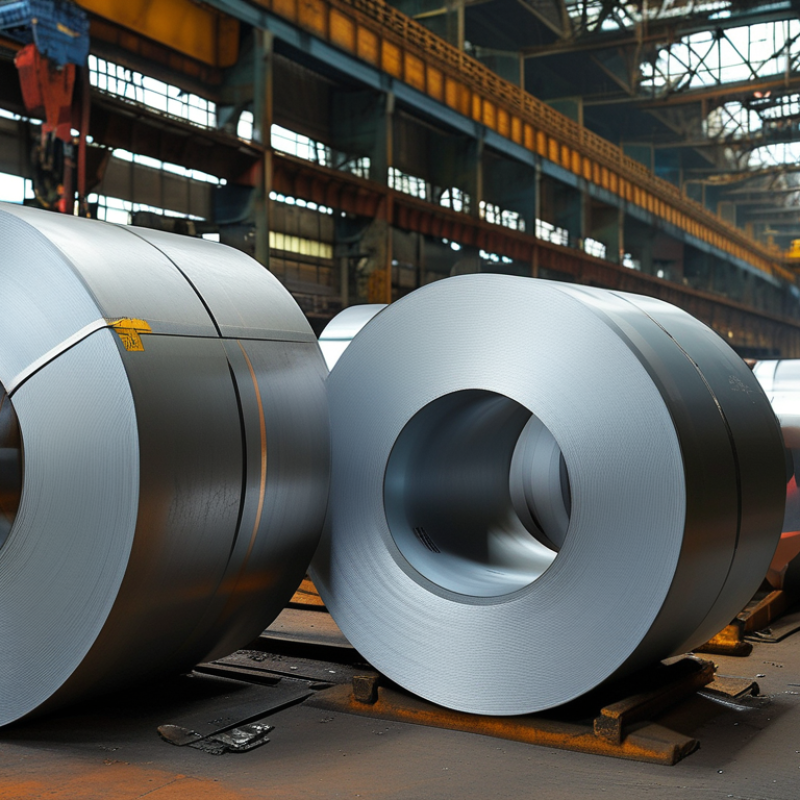
What Defines a Top Hot Rolled Steel Coil Factory in 2026
A top hot rolled steel coil factory delivers more than competitive pricing. It controls chemistry, slab heating, rolling temperature, and cooling speed with documented procedures. Buyers should expect consistent thickness across each coil, not only attractive mill certificates. Experienced production teams inspect surface scale, edge cracks, coil shape, and yield strength during multiple stages. Clear traceability should connect every coil to its heat number, test report, and shipping record.
Digital monitoring now matters. Reliable factories use sensors to record furnace temperatures and rolling pressure in real time. Independent testing can verify tensile strength, elongation, carbon content, and dimensional accuracy. Export experience also shows in practical details, including seaworthy packing, accurate weight lists, and realistic production schedules. A responsive technical team helps buyers select suitable grades for structural frames, pipes, machinery, or fabrication work.
Tips: Ask for recent inspection records, tolerance data, and sample packing photographs. Confirm whether the factory can support third-party inspections. Check how quickly it handles complaints. No factory is flawless. A minor surface issue may still appear, and that deserves honest discussion. The strongest supplier explains the cause, proposes corrective action, and records the lesson for future batches. Reliability grows through evidence, not confident promises.
| Evaluation Dimension | Measurable Factory or Product Data | Strong 2026 Buyer Benchmark | Why It Matters to Global Buyers | Recommended Verification Evidence |
|---|---|---|---|---|
| Product Thickness Range | Hot rolled coil is commonly supplied in approximately 1.2–25.4 mm thickness, depending on the mill, grade, and end use. | Capability covering the buyer’s required range with documented dimensional tolerances. | Suitable thickness capability reduces the need to split orders among different suppliers. | Product catalogue, dimensional inspection report, sample measurement record, and applicable product standard. |
| Product Width Range | Many commercial hot strip mills produce coil widths within approximately 600–2,000 mm; the available range varies by production line. | Width capability that matches the required slitting, forming, or fabrication process. | Correct width improves material yield and helps reduce downstream cutting loss. | Mill capability statement, recent production records, and width inspection data. |
| Common Steel Grades | Typical structural and general-engineering grades include S235JR, S355JR, ASTM A36, and equivalent grades where permitted by the applicable specification. | Clear grade equivalency must be confirmed by chemical, mechanical, and dimensional requirements rather than by name alone. | Grade accuracy is essential for load-bearing structures, fabrication, and regulatory compliance. | Mill Test Certificate, chemical composition, tensile test results, and the referenced standard edition. |
| Mechanical Strength | Representative minimum yield-strength values include 235 MPa for S235JR and 355 MPa for S355JR for relevant standard thickness categories. | Every heat and coil should meet the minimum yield strength, tensile strength, and elongation specified by the contract standard. | Mechanical consistency supports predictable forming, welding, and structural performance. | Heat-specific tensile test report and independent laboratory verification when required. |
| Coil Inner Diameter | 508 mm and 610 mm are widely used hot rolled coil inner-diameter formats. | Inner diameter, outer diameter, and maximum coil weight must match the buyer’s processing equipment. | Correct coil geometry prevents handling problems and production-line stoppages. | Packing list, coil identification tag, dimensional inspection report, and loading photographs. |
| Surface Condition | Available conditions may include hot rolled black surface, pickled and oiled surface, or other specified treatments. | Surface condition, scale level, edge condition, and allowable defects are defined before production. | Surface quality affects pickling, coating, welding, painting, and final appearance. | Approved reference sample, surface-quality clause, inspection report, and nonconformity procedure. |
| Dimensional Tolerance Control | Thickness, width, flatness, coil shape, and edge condition should be controlled according to the applicable product standard and purchase specification. | Inspection results are recorded for each coil or heat, with traceable measuring equipment. | Reliable tolerance control reduces rejection, rework, and material loss at the buyer’s facility. | Calibration certificates, inspection plans, dimensional reports, and third-party inspection records. |
| Chemical and Mechanical Testing | Standard quality control commonly includes heat-based chemical analysis, tensile testing, and bend testing where required by the grade or specification. | Test results are linked to the heat number and included in the Mill Test Certificate. | Heat-level testing provides objective evidence that the delivered material matches the ordered grade. | Mill Test Certificate, laboratory test method, heat number, and retained sample policy. |
| Traceability | Traceability should connect the purchase order, heat number, coil number, production record, inspection result, and shipping documents. | 100% coil-level identification from production through delivery. | Complete traceability simplifies claims, audits, recalls, and regulatory documentation. | Coil tags, barcode or QR records, heat map, packing list, and certificate cross-reference. |
| Quality Management | ISO 9001 is the internationally recognized quality-management-system standard commonly used for manufacturing operations. | A valid ISO 9001 certificate with a scope covering steel production, processing, or supply activities. | A documented quality system supports consistent processes and corrective action management. | Current certificate, certification-body details, audit scope, and corrective-action records. |
| Environmental Management | ISO 14001 provides a recognized framework for environmental management systems. | Documented environmental objectives, emissions controls, waste handling, and a valid ISO 14001 certification where applicable. | Environmental performance is increasingly relevant to procurement screening and supply-chain reporting. | ISO 14001 certificate, environmental policy, emissions data, and applicable legal-compliance records. |
| Carbon Data Availability | Product carbon-footprint data may be reported as kilograms of CO₂e per tonne of steel, using a defined system boundary and calculation method. | Product-level emissions data with stated boundaries, reporting year, methodology, and independent assurance where available. | Consistent carbon data supports customer disclosures, procurement scoring, and life-cycle assessment. | Environmental Product Declaration, verified carbon report, system-boundary statement, and calculation methodology. |
| Production Planning | Typical export planning commonly requires several weeks from order confirmation to shipment, depending on mill schedule, grade, quantity, and port conditions. | A written production schedule with milestone dates and an agreed shipment window. | Transparent planning helps buyers coordinate fabrication, inventory, vessels, and project deadlines. | Order acknowledgement, production status updates, inspection date, and shipping schedule. |
| Export Packaging | Common export protections include waterproof wrapping, steel or fibre-board edge protection, circumferential and radial strapping, and skid or eye-to-side loading as specified. | Packaging is selected for the transport route, storage period, lifting method, and moisture exposure. | Proper packaging reduces corrosion, deformation, and handling damage during international transport. | Packing specification, loading photographs, moisture-protection details, and container or vessel loading record. |
| Inspection and Claims Handling | Effective suppliers define inspection points, allowable deviations, notification periods, document requirements, and corrective-action procedures before shipment. | Pre-shipment inspection is available, and nonconformities are assigned a documented response time. | Clear procedures reduce commercial disputes and accelerate resolution when quality issues occur. | Inspection and Test Plan, claims procedure, corrective-action report template, and service-level agreement. |
| International Documentation | Common export documents include commercial invoice, packing list, bill of lading, certificate of origin where required, Mill Test Certificate, and inspection certificate when specified. | Documents are accurate, consistent, digitally shareable, and issued before customs or payment deadlines. | Complete documentation supports customs clearance, payment processing, and end-user compliance. | Document checklist, sample document set, certificate format, and document-approval workflow. |




 +86 18865111877