China Top Hot Rolled Mild Steel Coil Suppliers?
China’s steel industry offers a wide range of suppliers for Hot Rolled Mild Steel Coil. Choosing the right partner requires more than comparing quoted prices. Buyers should examine mill capacity, production controls, export experience, and communication quality.
Reliable suppliers usually provide clear information about steel grades, coil width, thickness, weight, surface condition, and edging options. They should also share inspection reports, chemical compositions, mechanical test results, and applicable quality certificates. A serious supplier can explain how coils are manufactured, protected, loaded, and tracked before shipment.
Details matter. A properly secured coil should arrive without severe rust, impact marks, or unstable packaging. Buyers may also request photographs of the production line, loading area, and finished coils. These records cannot replace independent inspection, but they improve transparency.
Price is important. It is not everything.
Freight terms, minimum order quantities, payment conditions, and delivery schedules can change the final cost significantly. Experienced purchasers often compare total landed cost instead of accepting the lowest offer. They also confirm whether the quoted grade matches their forming, welding, or fabrication requirements.
Some supplier information may sound impressive but remain difficult to verify. That is where careful questioning becomes valuable. Independent inspection can reduce risk, although it adds time and expense. Buyers should review samples, contract terms, and after-sales responsibilities before placing large orders.
This guide introduces leading Chinese suppliers through practical evaluation points. It considers product consistency, documentation, manufacturing capability, export reliability, and customer support. No ranking is permanent. Market conditions, raw material prices, and supplier performance can change.
What Is Hot Rolled Mild Steel Coil?
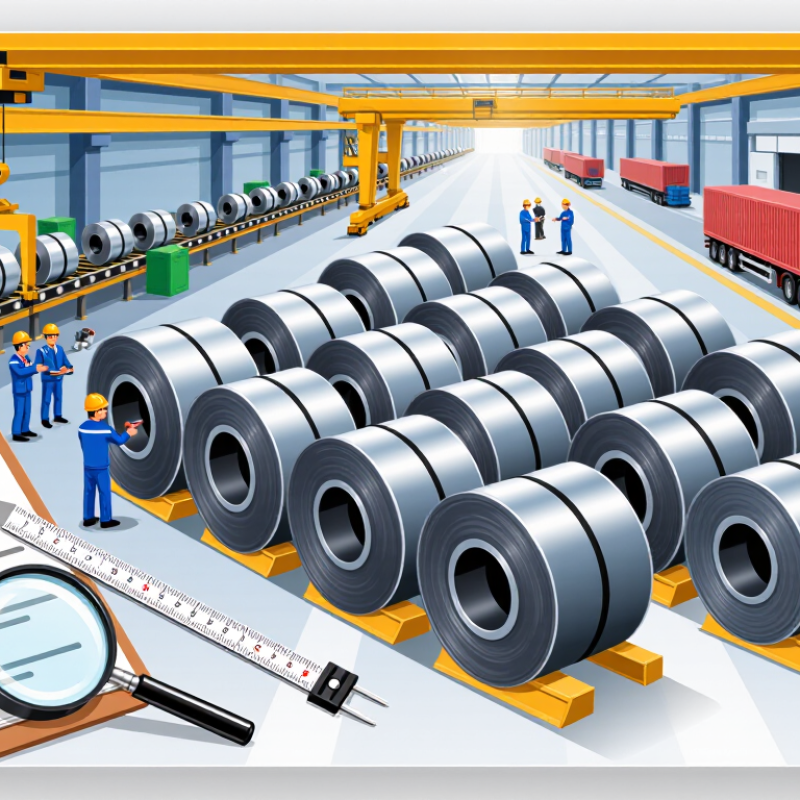
Hot rolled mild steel coil is low-carbon steel rolled at temperatures above its recrystallization point. It leaves the mill as a continuous, tightly wound strip. The process improves productivity and allows wide, heavy sections to be produced efficiently. However, heat creates a dark oxide layer called mill scale.
It is a practical material for frames, brackets, storage racks, pipes, and general fabrication. Its carbon content supports good weldability and easy forming. The surface is not polished. Expect visible scale, slight edge variation, and possible flatness differences.
These details matter when a project needs painting, galvanizing, or accurate cutting. A fabricator should check thickness, width, coil weight, yield strength, tensile strength, and elongation before production. Small differences can affect bending results.
Reliable hot rolled coil suppliers should provide traceable test certificates and clear dimensional tolerances. Heat numbers should match the delivered coil. Surface inspection also deserves attention, especially after slitting or leveling. In practice, a coil may meet its grade while still needing surface treatment. That distinction is often overlooked.
I have found that purchasing only by price creates avoidable rework. A better decision compares verified chemistry, mechanical data, packaging, delivery protection, and technical support. The “best” coil depends on the finished application, not just the quoted grade.
Key Standards and Specifications for Mild Steel Coils
When sourcing hot rolled mild steel coils from China, standards should guide the purchase more than a low quoted price. Common references include ASTM A1011, EN 10111, and JIS G3131. Each standard defines different requirements for chemistry, strength, forming performance, and dimensional tolerance. Confirm the exact standard revision with the supplier.
Specify thickness, width, coil weight, inner diameter, and outer diameter. These details affect transport, decoiling, and production planning. A buyer may request 2.0 mm thickness and 1,250 mm width, but the permitted tolerance still needs written approval.
Edge condition also matters. Mill edges suit some fabricators, while trimmed edges support cleaner cutting. Surface requirements should state whether light scale, oiling, or pickling is acceptable.
Ask for a mill test certificate showing heat number, chemical analysis, yield strength, tensile strength, and elongation. Independent inspection can verify thickness at several coil positions, not just one point. In practical purchasing, this check often prevents costly surprises.
A certificate can look complete. It may still omit the agreed tolerance. Samples should be tested when forming performance is critical, especially for bending or stamping.
Do not assume every “mild steel” grade behaves alike; carbon content and cooling practice can change the result. Some specifications remain unclear until the first coil reaches the press.
How to Evaluate China’s Top Coil Suppliers
China Top Hot Rolled Mild Steel Coil Suppliers?
How to Evaluate China’s Top Coil Suppliers
Evaluating Chinese hot rolled mild steel coil suppliers requires more than comparing prices.
Request recent mill certificates showing chemical composition, yield strength, tensile strength, and elongation. Match each certificate with the coil’s heat number.
Paperwork is not proof.
Inspect production capability through factory records, equipment details, and quality-control procedures. A reliable supplier should explain thickness tolerance, width accuracy, surface condition, and coil weight clearly. Ask how defects are identified before shipment. Photos can help, but an independent inspection provides stronger evidence.
Check whether packaging suits long-distance sea transport. Moisture-resistant wrapping, firm steel straps, and protected coil edges can prevent costly damage. Review production lead times using recent orders, not optimistic estimates. Also examine communication during technical discussions.
Vague answers may signal weak process control.
I once treated a low quotation as the strongest buying signal.
That was a mistake. The cheaper coil required extra sorting after arrival, reducing the apparent savings. A better assessment combines price, consistency, inspection access, documentation, and after-sales response. Ask for sample records and clarify every tolerance before signing.
Small gaps matter.
Supplier evaluation should remain practical, documented, and open to revision when new evidence appears.
Ordering, Quality Control, and Import Considerations
China Top Hot Rolled Mild Steel Coil Suppliers?
Ordering hot rolled mild steel coils from China requires more than comparing quotations. Request the supplier’s legal registration, production capacity, export experience, and recent inspection records. Specify grade, thickness, width, coil weight, surface condition, edge type, and quantity in the purchase contract. Confirm acceptable tolerances before production begins. Small omissions become expensive.
Quality control should cover chemistry, mechanical strength, dimensions, surface defects, and coil appearance. Ask for heat numbers linked to mill test certificates. Independent inspectors can witness sampling, weighing, and loading before shipment. Photographs should show labels, coil protection, and container placement. Do not rely only on factory paperwork. I have seen buyers approve attractive samples while ignoring inconsistent batch tolerances. That mistake deserves reflection.
Import planning needs equal attention. Verify the correct customs classification, duty exposure, import permits, and documentation with a qualified customs professional. Commercial invoices, packing lists, certificates of origin, bills of lading, and test certificates must match exactly. Check whether destination rules require specific chemical disclosures or product standards. Use moisture-resistant wrapping, strong eye protection, and secure strapping for ocean transport. Clarify Incoterms, insurance responsibility, demurrage risk, and port charges before payment. Delivery dates often fail because buyers measure production time, not total transit time. Keep a written approval trail for every change.
China Hot-Rolled Mild Steel Coil Suppliers: Quality Control Reference
Maximum carbon content in selected widely used hot-rolled structural steel specifications. Lower carbon content generally supports easier forming and welding, but the final purchasing decision should also verify thickness, width, yield strength, surface condition, mill test certificates, and applicable import documentation.
Values are maximum carbon content by mass for the referenced grade conditions: ASTM A36 at thickness up to 19 mm, EN 10025-2 S235JR, S275JR, and S355JR. Always confirm the current standard edition and the exact thickness range stated in the purchase order. For supplier evaluation, use these limits together with heat-by-heat chemical analysis, mechanical test results, dimensional inspection, and pre-shipment verification.





 +86 18865111877