Leave Your Message

2026 Top Carbon Hot Rolled Steel Plate Manufacturers?

The 2026 search for leading Hot Rolled Steel Plate Carbon manufacturers requires more than a polished supplier list. Buyers need evidence from real production environments, not impressive claims alone. This guide examines manufacturers through measurable criteria, including furnace capacity, slab quality, rolling control, plate thickness accuracy, certifications, delivery performance, and technical support.

Dr. Edwin Basson, Director General of the World Steel Association, has stated, “Steel is fundamental to modern society.” That observation remains highly relevant. Carbon hot rolled plate supports bridges, pressure vessels, heavy machinery, shipbuilding, and structural frames. Its performance begins with chemistry control and continues through reheating, controlled rolling, cooling, inspection, and shipment.

Details matter.

A reliable manufacturer should provide mill certificates, heat numbers, mechanical test results, and traceability records. Buyers should also inspect surface condition, edge quality, flatness, and tolerance consistency. A plate may appear acceptable under warehouse lighting, yet reveal scale defects after cutting or welding. Experienced purchasers understand this risk.

This review also considers practical factors. These include minimum order quantities, export packaging, port access, customization options, and response times when specifications change. Sustainability is included, but it is not treated as a marketing shortcut. Emissions data should be supported by credible reporting.

No ranking is perfect. Regional pricing, energy costs, and delivery conditions can change quickly in 2026. Some manufacturers may perform strongly in volume production but offer limited flexibility. Others may excel at custom grades while carrying longer lead times. The strongest choice depends on the application, not the loudest advertisement.
2026 Top Carbon Hot Rolled Steel Plate Manufacturers?

What Defines a Top Carbon Hot Rolled Steel Plate Manufacturer in 2026

A top carbon hot rolled steel plate manufacturer in 2026 must offer more than competitive pricing. It should control chemistry, reheating, rolling, cooling, and cutting with measurable consistency. Reliable producers publish heat numbers, mechanical results, dimensions, and applicable test standards. Each plate should remain traceable from billet preparation to final inspection. That detail matters.

Production experience is visible in practical results. Plates should show stable thickness, clean edges, controlled flatness, and limited scale after descaling. Experienced engineers can adjust rolling schedules for bridge parts, pressure equipment, machinery frames, and general fabrication. They also understand how carbon content affects weldability, hardness, and forming behavior. However, no producer is perfect. Buyers should question unexplained tolerances and repeated corrective reports.

Tips: Request recent mill certificates, sample inspection records, and a clear quality-control plan. Confirm whether ultrasonic testing, impact testing, or third-party inspection is available. Visit the facility when project risk is high. Check complaint handling, not only sales promises. A strong manufacturer responds with evidence, corrective action, and realistic delivery dates. Beware of certificates that lack heat identification or test conditions. Small omissions can become expensive fabrication problems. Ask for packaging photographs, marking details, and loading procedures before shipment. Reliable communication should continue after the purchase order, especially when specifications change.
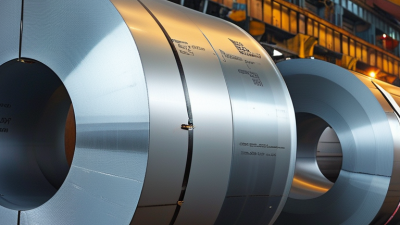
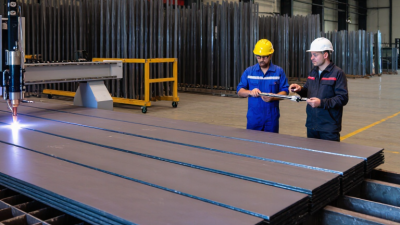
Key Production Processes for Carbon Hot Rolled Steel Plates

Carbon hot rolled steel plate production begins with controlled raw materials and a verified chemical recipe. Iron, carbon, and alloying elements must stay within the specified range. Small chemistry changes can affect weldability, strength, and surface behavior. Producers melt the charge in a furnace, refine it, and cast it into slabs. Each slab receives an identification record for traceability.

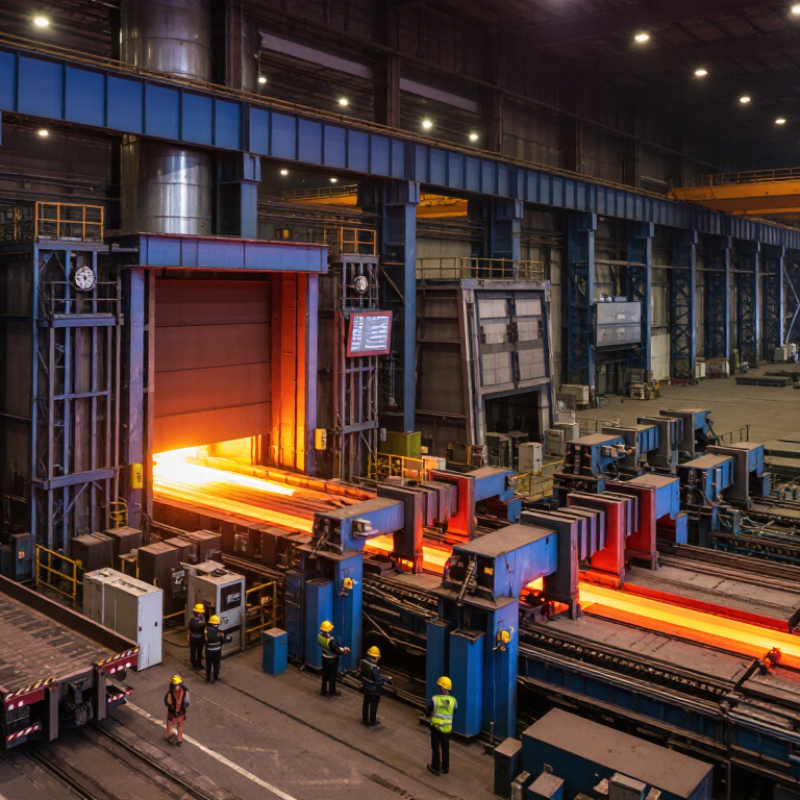
The slab is reheated evenly before rolling. Uneven heating can create internal stress. High-pressure water removes scale from the surface. Roughing mills reduce thickness, while finishing stands build the required plate dimensions. Rolling temperature matters. It influences grain structure and final mechanical performance. After rolling, controlled cooling helps achieve consistent strength. Plates are then cut, leveled, and visually inspected.

Testing is practical, not decorative. Laboratories check thickness, flatness, tensile strength, yield strength, and impact performance when required. Ultrasonic inspection may reveal internal discontinuities that cannot be seen by eye. Surface defects are assessed carefully before shipment. No production line is flawless. Edge cracking, uneven cooling, or measurement drift can still occur. Reliable manufacturers investigate these problems instead of hiding them. Clear test reports, calibrated instruments, and retained samples support dependable purchasing decisions in 2026.

Standards, Grades, and Quality Measures Used by Leading Manufacturers

Leading carbon hot rolled steel plate manufacturers are judged by standards, not only production volume. The World Steel Association reported 1.89 billion tonnes of crude steel production in 2023. That scale makes traceability essential. Each plate should connect to a heat number, chemical analysis, rolling record, and inspection certificate.

Common structural grades include ASTM A36, ASTM A572 Grade 50, EN 10025 S275, and S355. Their yield strength, weldability, impact performance, and chemical limits differ.

Buyers should not treat equivalent-looking grades as interchangeable. Carbon equivalent matters during welding. A small chemistry change can affect cracking risk. It can also change fabrication costs. The standards explain requirements, but project specifications must define the actual service conditions.

Quality control should include tensile testing, yield testing, elongation checks, bend tests, and Charpy impact testing when required.

Ultrasonic inspection under EN 10160 can identify internal laminations. Dimensional checks should cover thickness, flatness, width, and edge condition.

ISO 9001 supports process consistency, while ISO/IEC 17025 strengthens laboratory credibility. Still, certificates are not flawless. Sampling can miss local defects, especially across large plates. Experienced buyers should review test frequency, calibration dates, and traceability instead of accepting paperwork quickly. A clean surface helps. It does not prove internal quality.

How to Compare Manufacturers by Capacity, Technology, and Service

Choosing among the 2026 top carbon hot rolled steel plate manufacturers requires more than comparing annual output. The World Steel Association reported global crude steel production of about 1.88 billion tonnes in 2024. That figure shows the market’s scale, but capacity claims can mislead. Ask for usable plate capacity, furnace schedules, rolling widths, and recent delivery records. A mill producing 500,000 tonnes may offer better availability than a larger facility serving congested export routes.

Technology should be checked through evidence, not impressive brochures. The International Energy Agency estimates that iron and steel production creates roughly 2.6 gigatonnes of carbon dioxide annually, representing about 7–9% of global energy-related emissions. Efficient reheating furnaces, controlled rolling, automated thickness measurement, and reliable descaling systems can reduce waste and improve plate consistency. Request mill test certificates, dimensional tolerances, impact-test results, and traceability from slab to shipment. Small details matter.

Service separates a capable producer from a difficult supplier. Compare response times, technical support, packaging standards, inspection access, and claims handling. Delivery performance should be measured with documented on-time data, not promises. A practical trial order is useful: test surface quality, flatness, cutting accuracy, and communication during one shipment. I would still keep some doubt. Reported capacity may reflect theoretical equipment limits, while service quality can change with one overloaded production month. OECD steel industry assessments also warn that global excess capacity pressures can affect utilization and investment decisions.

Major Market Trends Shaping Carbon Steel Plate Manufacturing in 2026

2026 Top Carbon Hot Rolled Steel Plate Manufacturers?

Carbon hot rolled steel plate manufacturing is changing quickly in 2026. Lower-carbon production is now a purchasing priority, not just a public-relations claim. Manufacturers are investing in electric arc furnaces, cleaner electricity, and higher scrap usage. However, scrap quality can vary. That creates inconsistent chemistry unless producers apply strict sorting and testing. Energy prices also influence plate costs, delivery schedules, and regional competitiveness.

Digital traceability is becoming more valuable across the supply chain. Buyers increasingly request heat numbers, mill certificates, ultrasonic inspection records, and emissions data. Automated rolling controls help manufacturers maintain thickness and strength across large plate dimensions. Demand is growing in bridges, renewable-energy structures, shipbuilding, pressure equipment, and heavy machinery. Regional infrastructure spending may support steady orders, but construction cycles remain difficult to predict. Experience still matters when selecting a reliable producer.

Tips: Compare tensile strength, impact performance, flatness, surface condition, and available thicknesses. Request recent inspection reports, not only catalog specifications. Check whether production data can be traced to each heat. Visit a facility when possible. A polished website proves little. Also, question unusually low prices; they may reflect weaker testing, uncertain delivery, or incomplete environmental information. Even experienced buyers can overlook these details.

2026 Top Carbon Hot Rolled Steel Plate Manufacturers? – Major Market Trends Shaping Carbon Steel Plate Manufacturing in 2026

Market Dimension Verified Data Point 2026 Relevance to Carbon Hot Rolled Plate Manufacturing and Purchasing Implication Source / Reference
Global steelmaking base World crude steel production reached approximately 1,839.4 million tonnes in 2024. The size of the upstream steel base supports broad availability of carbon steel slab and plate, while regional supply-demand differences continue to affect lead times. Evaluate rolling capacity, slab access, delivery reliability, and regional inventory rather than relying only on nominal production capacity. World Steel Association, World Steel in Figures 2025
Leading production regions 2024 crude steel output included approximately 1,005.1 Mt in China, 149.4 Mt in India, 84.0 Mt in Japan, 79.5 Mt in the United States, and 37.2 Mt in Germany. Large production centers remain important sources of hot rolled coil, heavy plate, and feedstock, but trade measures and freight costs can change the most competitive supply route. Compare landed cost, applicable duties, origin requirements, and product certification for each destination market. World Steel Association, World Steel in Figures 2025
Product classification Harmonized System heading 7208 covers flat-rolled products of iron or non-alloy steel, of a width of 600 mm or more, hot-rolled and not clad, plated, or coated. Classification affects customs treatment, trade statistics, duties, and the comparability of supplier quotations. Confirm width, thickness, coating status, grade, and customs code before comparing offers or calculating import costs. World Customs Organization, Harmonized System heading 7208
Energy and emissions pressure The steel sector is responsible for approximately 7%–9% of global energy-related CO2 emissions, according to the International Energy Agency. Carbon intensity is becoming a commercial factor alongside thickness, grade, surface quality, and price. Request product carbon-footprint data, energy-source information, emissions boundaries, and third-party verification when low-emission steel is required. IEA, Iron and Steel Technology Roadmap; IEA, Global Energy Review
Electric arc furnace expansion Electric arc furnaces can melt scrap and direct reduced iron using electricity, and their emissions profile depends strongly on electricity sources, metallic charge, and operating efficiency. EAF-based production can support lower-emission plate supply where scrap, direct reduced iron, and relatively low-carbon electricity are available. Assess chemistry control, residual-element management, slab quality, plate toughness, and electricity-carbon intensity—not furnace type alone. IEA, Iron and Steel Technology Roadmap; World Steel Association technical resources
Scrap and raw-material security Steel production uses two main metallic routes: iron ore-based production and recycling-based production. Scrap quality and availability are key constraints for EAF operations. Volatility in scrap, iron ore, coking coal, and electricity prices can create meaningful differences in hot rolled plate quotations. Use price-adjustment formulas, define permissible chemistry ranges, and monitor raw-material surcharges in long-term contracts. World Steel Association; International Energy Agency, Iron and Steel Technology Roadmap
European carbon-border reporting The European Union’s Carbon Border Adjustment Mechanism entered its definitive regime on 1 January 2026 after the transitional reporting period that began in October 2023. Certain imported iron and steel products require embedded-emissions information and may create a carbon-cost exposure for importers. Suppliers selling into the EU should maintain auditable emissions data, installation information, production-route records, and product-level documentation. European Commission, Carbon Border Adjustment Mechanism
Quality and conformity Common specifications for carbon steel plate and hot rolled products address chemical composition, tensile properties, yield strength, impact performance, dimensions, flatness, and surface condition. The most competitive manufacturer is not necessarily the lowest-cost producer if the plate fails fabrication, welding, forming, or inspection requirements. Specify the governing standard, grade, heat-treatment condition, test requirements, tolerances, inspection plan, and certificate format in the purchase order. ASTM International, EN standards, ISO standards, and applicable national steel standards
Demand from infrastructure and energy Hot rolled carbon plate is widely used in bridges, buildings, pressure-related equipment, storage tanks, construction machinery, transport equipment, and energy infrastructure. Public infrastructure, grid investment, renewable-energy equipment, and heavy engineering can support demand for thicker and higher-strength plate in 2026. Manufacturers with reliable heavy-gauge rolling, controlled cooling, heat treatment, ultrasonic testing, and cut-to-length services may command stronger project participation. International Energy Agency, World Energy Investment; industry standards for structural and pressure applications
Digital traceability Heat numbers, mill test certificates, production records, inspection results, and shipment documents are commonly used to establish material traceability. Digital documentation helps buyers verify grade, origin, emissions information, and conformity across increasingly regulated supply chains. Prioritize suppliers that can provide consistent heat-level records, electronically searchable certificates, and rapid nonconformance responses. ISO 9001 quality-management principles; common steel-industry mill-certification practices
Note: Production figures refer to crude steel and should not be interpreted as individual carbon hot rolled plate output. Actual supplier selection should be based on applicable grade, dimensions, certification, delivery location, trade requirements, total landed cost, and verified emissions data.